
Freelancing in the Middle East is a little different from simply taking a global list of platforms and adding Dubai to the title.
International marketplaces such as Upwork and Fiverr are widely used across the region, but they are only part of the picture. Arabic-first platforms such as Ureed, Mostaql and Khamsat give freelancers another route into businesses across the Gulf, Egypt, Jordan and the wider Arab market. At the same time, places like the UAE have built their own infrastructure around independent work, including freelance permits and business setups.
That means the right platform depends quite a lot on who you want to work with. Someone targeting Saudi or UAE businesses with Arabic content services may search very differently from a developer in Dubai trying to find US clients.
So rather than ranking these websites from best to worst, here are the platforms worth understanding and where each one fits.

Flexable
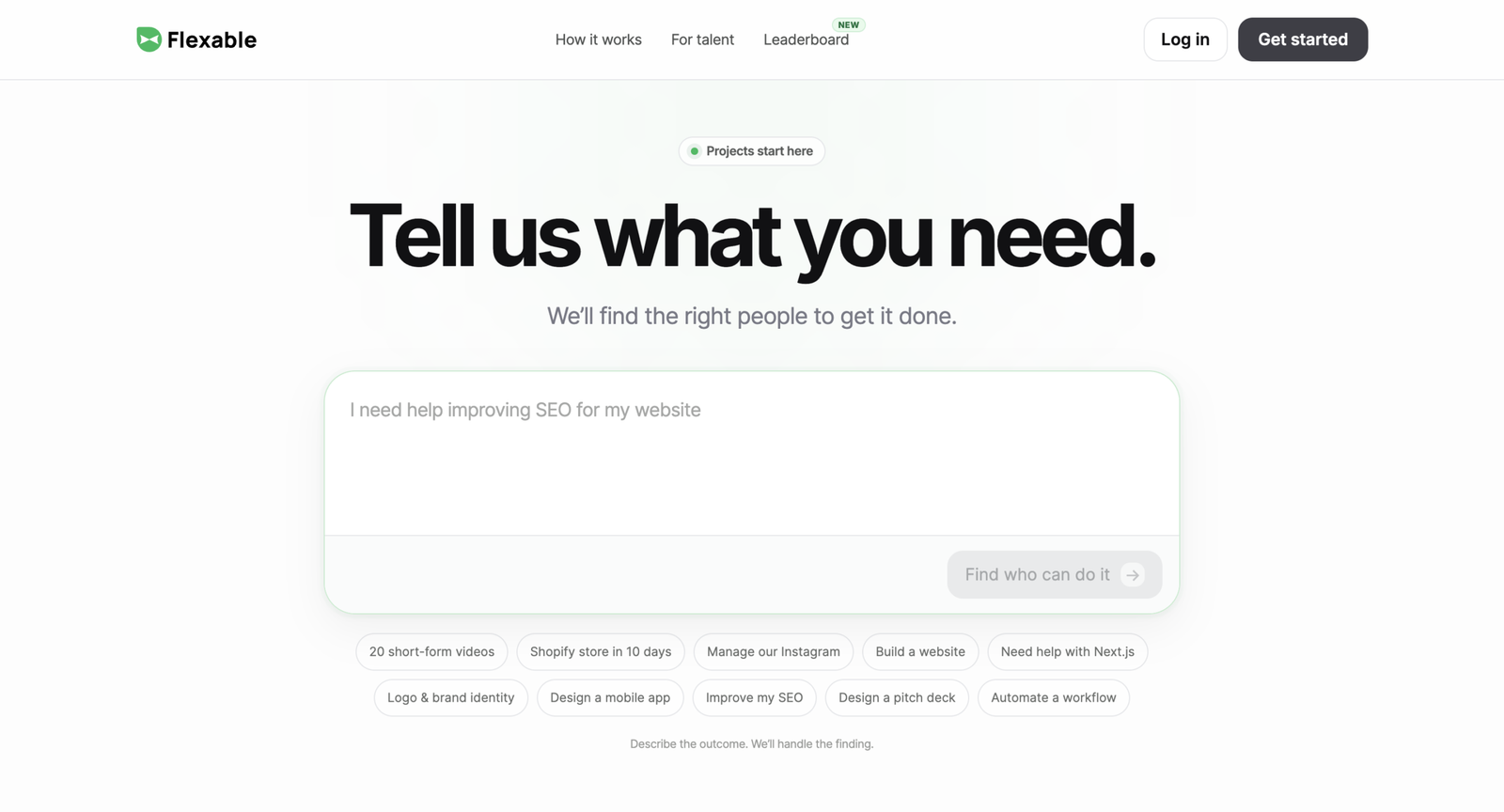
Flexable starts with the project rather than expecting clients to work through a huge directory of profiles.
A client explains what they need, along with the budget, timeline and scope, and relevant freelancers or teams can then be matched around the work. For freelancers, that means your profile needs to show where you are genuinely useful rather than simply listing every skill you have.
The model also works with agencies and small teams, which can make sense in the Middle East where a lot of digital work sits between individual freelancing and smaller specialist agencies. A client may need a developer and designer together, or a marketing project may require several different skills rather than one person trying to cover everything.
That project-first approach is part of how the product has changed over time. We explain it in more detail in FLXB 2.0: How Flexable Works Today.
Ureed
Ureed is one of the more relevant platforms if your goal is specifically the Middle East rather than freelancing globally.
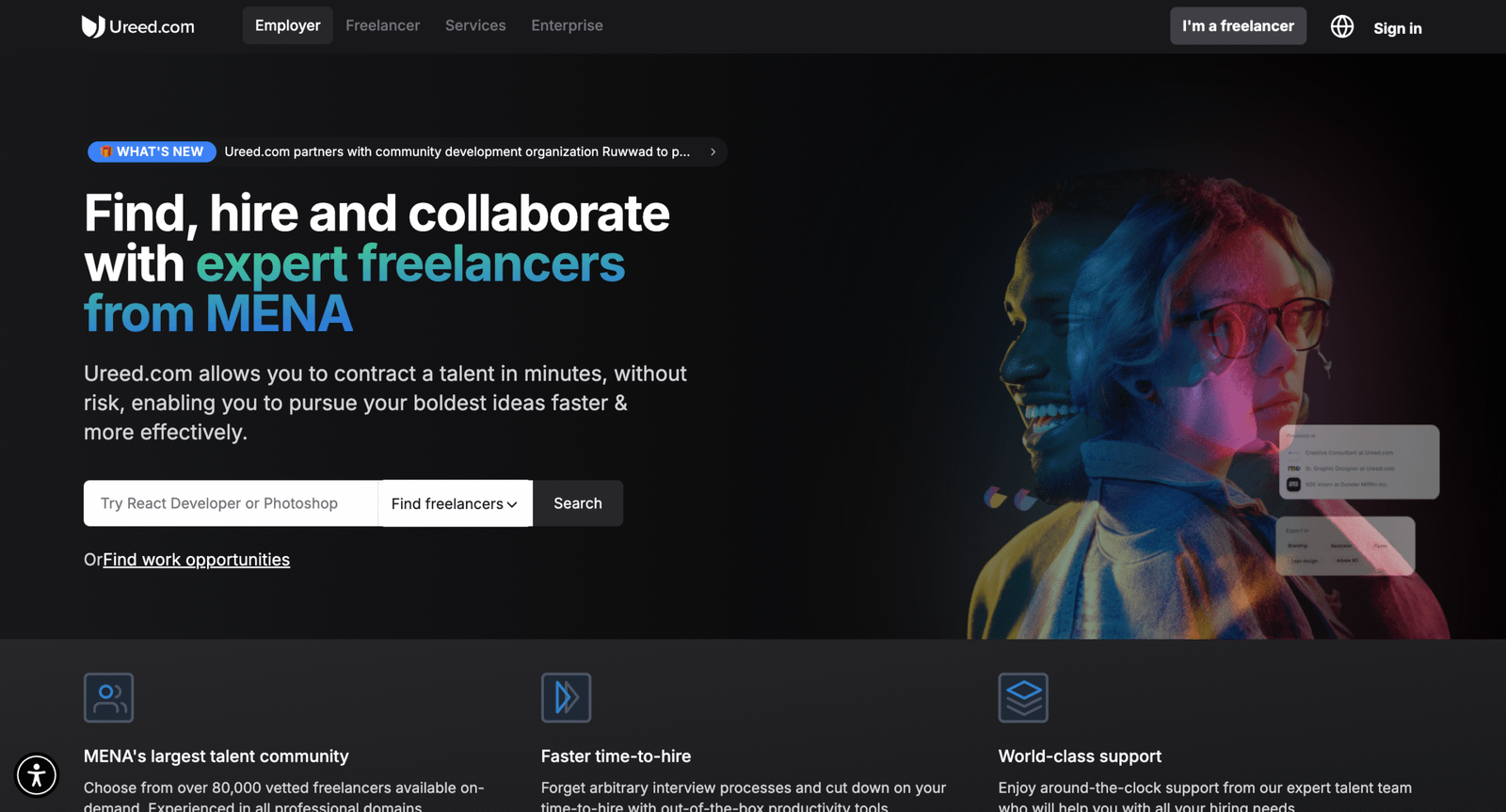
The company positions itself around the MENA market and currently connects businesses with freelancers across a wide range of professional fields. Freelancers can create profiles, search opportunities, submit proposals and receive payments through the platform.
Its regional focus matters because language and business context can be a genuine advantage here. Arabic content, translation, localisation, marketing and region-specific professional services often need someone who understands more than the technical task itself.
Ureed also operates across several major Middle Eastern markets, including the UAE, Saudi Arabia, Qatar and Jordan, which makes it much more regionally relevant than many generic freelance sites.
If your goal is to build relationships with Arab businesses rather than only chase international projects, it is one of the platforms I would look at early.
Mostaql
Mostaql is one of the best-known Arabic freelance marketplaces.
The platform is built around projects rather than tiny predefined services. Clients publish what they need, freelancers send proposals, and the two sides agree on the scope and terms of the work.
That makes it useful for development, design, marketing, writing, engineering, consulting and other projects where the client needs something more involved than a quick task.
The Arabic-first experience is probably the main reason to use it.
A freelancer who is comfortable working with Arabic-speaking clients across Saudi Arabia, the UAE, Egypt, Jordan and other regional markets can access opportunities that may never appear on a platform dominated by English-language projects.
For people who want serious regional project work, Mostaql deserves a place alongside the big international marketplaces rather than being treated as a smaller copy of them.
Khamsat
Khamsat comes from the same wider Arabic digital ecosystem as Mostaql, but the way people use it is different.
It is built much more around smaller, clearly defined services.
That puts it closer to the Fiverr model. A freelancer can offer something specific, such as a design task, translation, voiceover, content service, technical fix or another defined piece of work, and clients can purchase based on that offer.
For someone new to freelancing in the Arab market, that can make it easier to understand what they are selling. Instead of writing a completely new proposal for every opportunity, you can build offers around work you already know how to deliver repeatedly.
The downside is that service-based marketplaces can become price-sensitive, especially in popular categories. Clear positioning still matters.
Malt
Malt is European in origin, but it has been building a presence around the UAE and the wider international professional market.
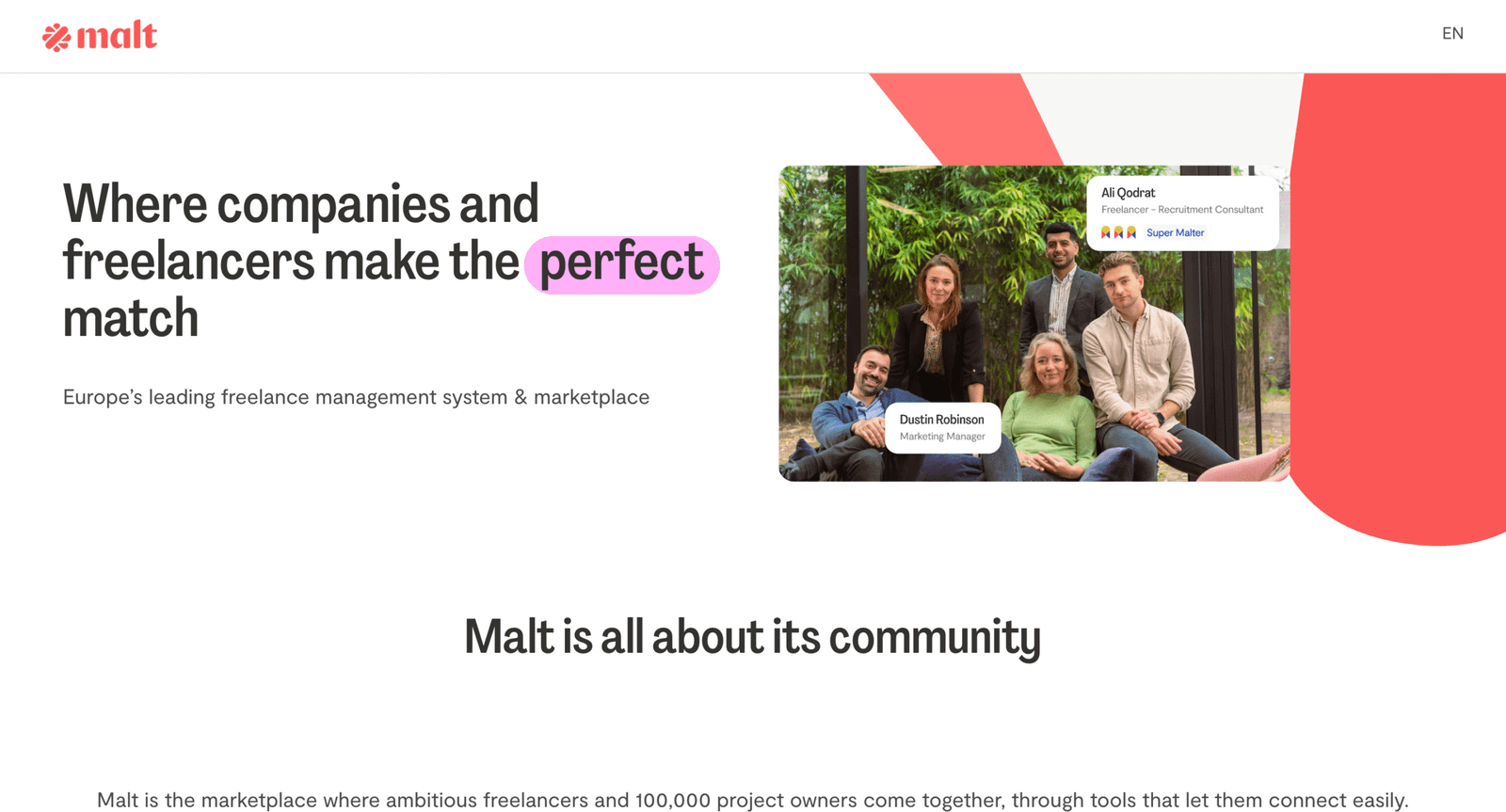
Its model feels much closer to professional freelancing and consulting than to a small-gig marketplace. Freelancers build profiles around their skills, experience, rates and availability, while companies search for specialists or send project opportunities.
That tends to suit experienced developers, data professionals, consultants, marketers, product specialists and other people whose work is difficult to reduce to a tiny predefined service.
Malt also handles parts of the administrative process around quotes, contracts and invoicing, which can make the working relationship more structured.
For freelancers based in the UAE who want a mix of regional, European and international opportunities, it is worth exploring alongside platforms that are more heavily focused on the Arab market.
Upwork
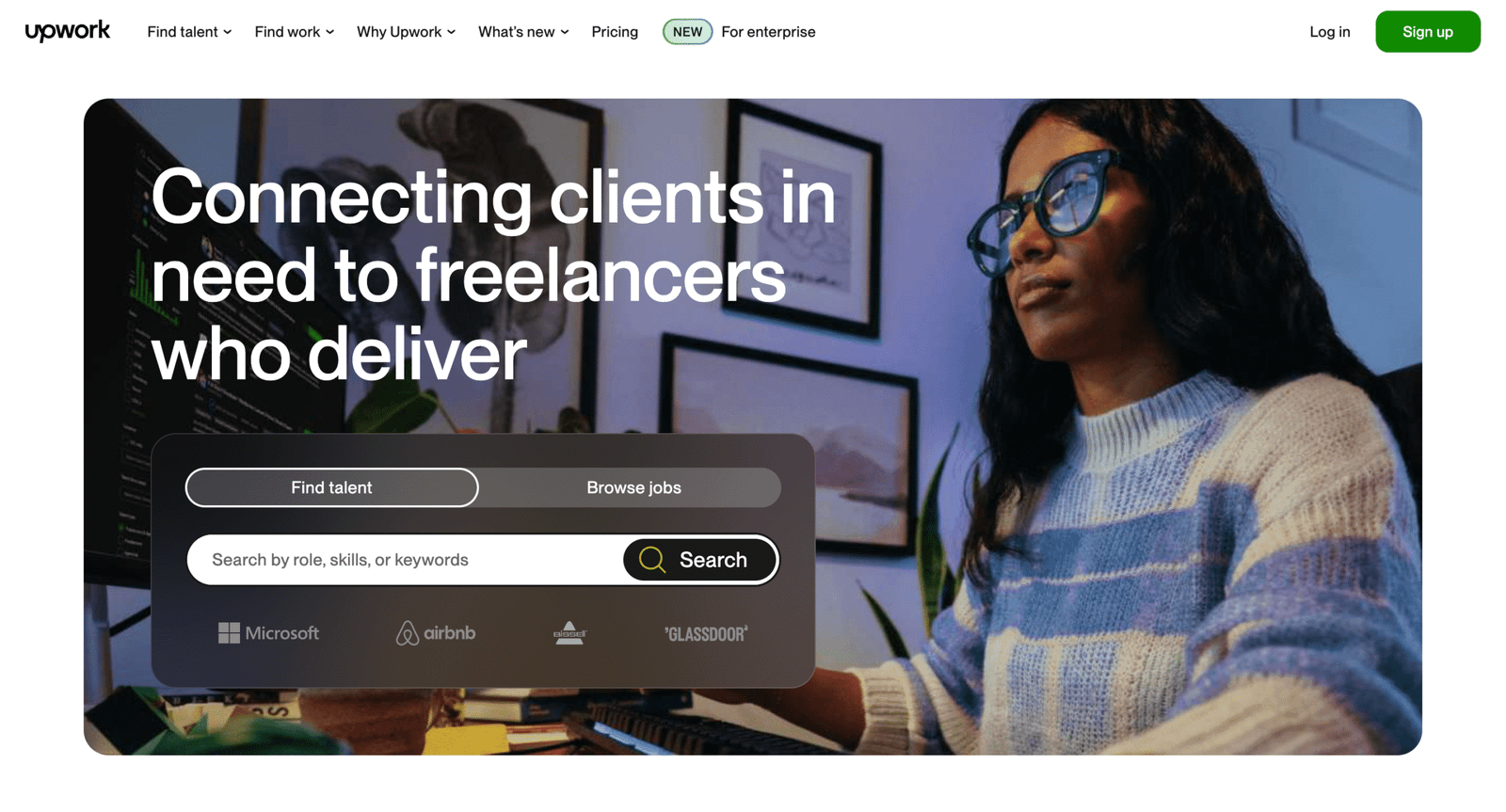
Upwork remains one of the biggest options if your goal is international work.
Freelancers across the Middle East use it to connect with businesses in the US, Europe, the Gulf and elsewhere across development, design, marketing, writing, AI, finance, customer support, consulting and many other areas.
The amount of work is one of its biggest advantages, but it also means you are competing globally.
That makes a specific profile much more useful than a broad one. A freelancer who clearly works on Shopify development for ecommerce companies is easier for a client to understand than someone offering websites, logos, SEO, writing and social media all at once.
For people in the Middle East who are comfortable working in English and want clients well beyond the region, Upwork is still one of the main global marketplaces to understand.
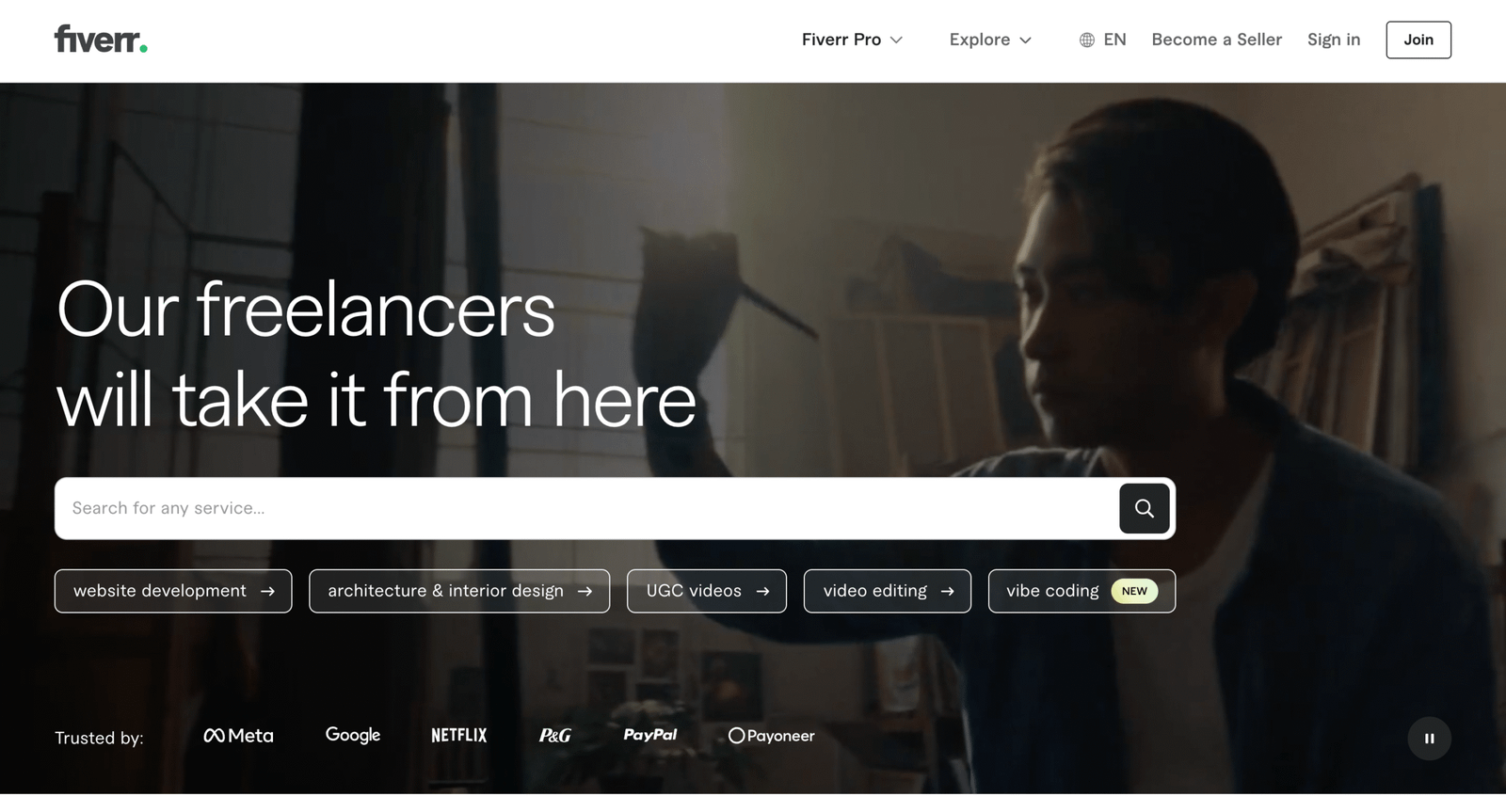
Fiverr
Fiverr works best when the thing you sell can be explained clearly before the client hires you.
A video editor can package a certain number of videos. A designer can sell a defined branding deliverable. A voice artist can offer a specific recording service. A developer might sell a particular setup or technical fix.
That model can work very well for freelancers in the Middle East because the client does not necessarily care where you are located if the service is digital and the output is easy to understand.
It is less natural for complicated consulting or large projects where you need several conversations before anyone even knows what the work involves.
Fiverr can also become competitive on price, so the goal should not simply be to create the cheapest service in your category. A clear niche, good examples and strong client reviews matter much more over time.
Toptal
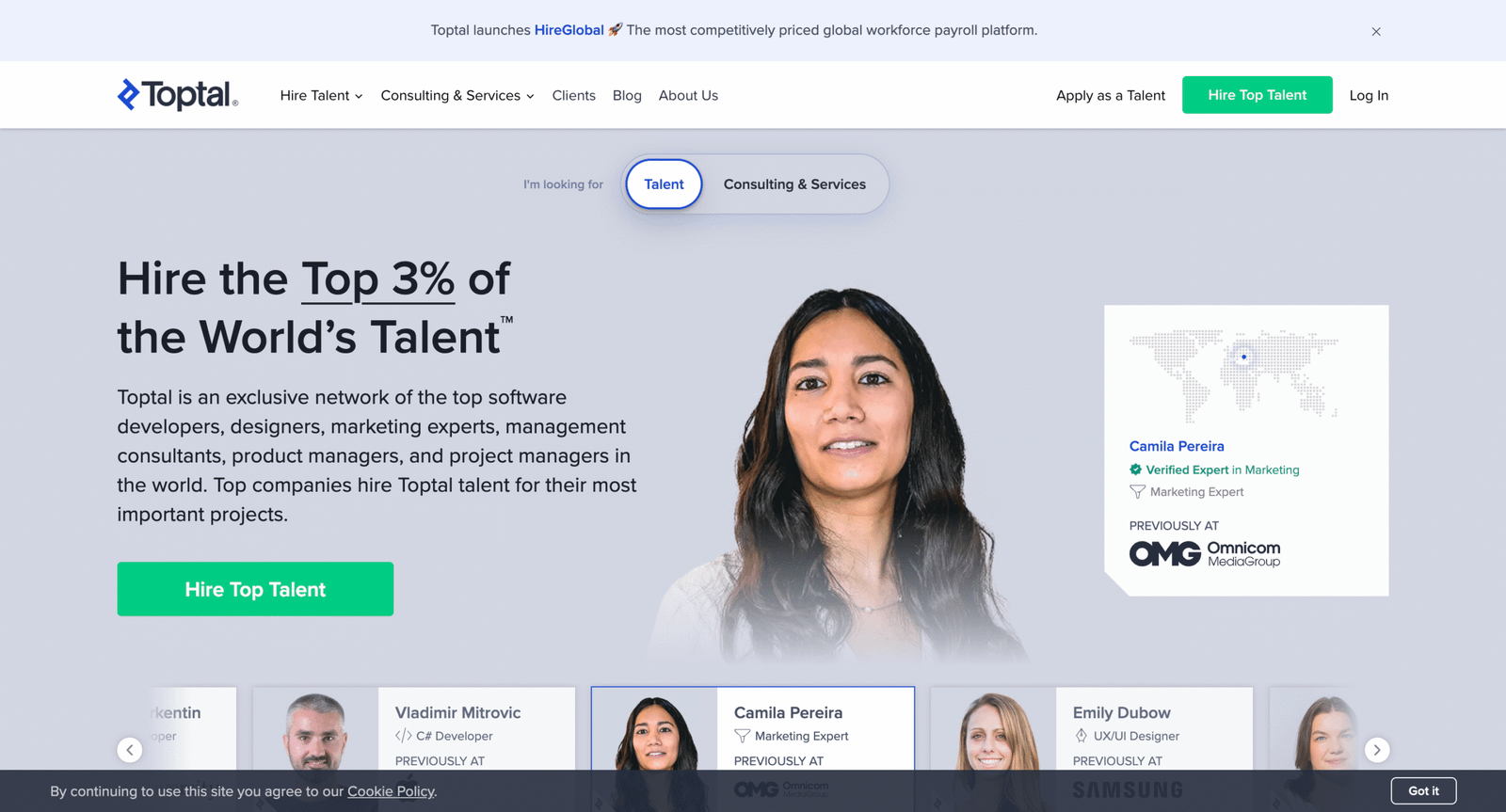
Toptal makes more sense later in a freelance career.
It uses a screening process before freelancers enter its talent network and is particularly associated with areas such as software development, design, finance, project management and consulting.
That means it is not really aimed at someone trying to get a first small project online.
For experienced professionals in places such as Dubai, Abu Dhabi, Riyadh, Doha or elsewhere in the region, the international nature of the network can be attractive because your market is not limited to companies nearby.
If you already have a strong professional background and prefer more selective client relationships, it can be worth exploring.
Freelancer.com
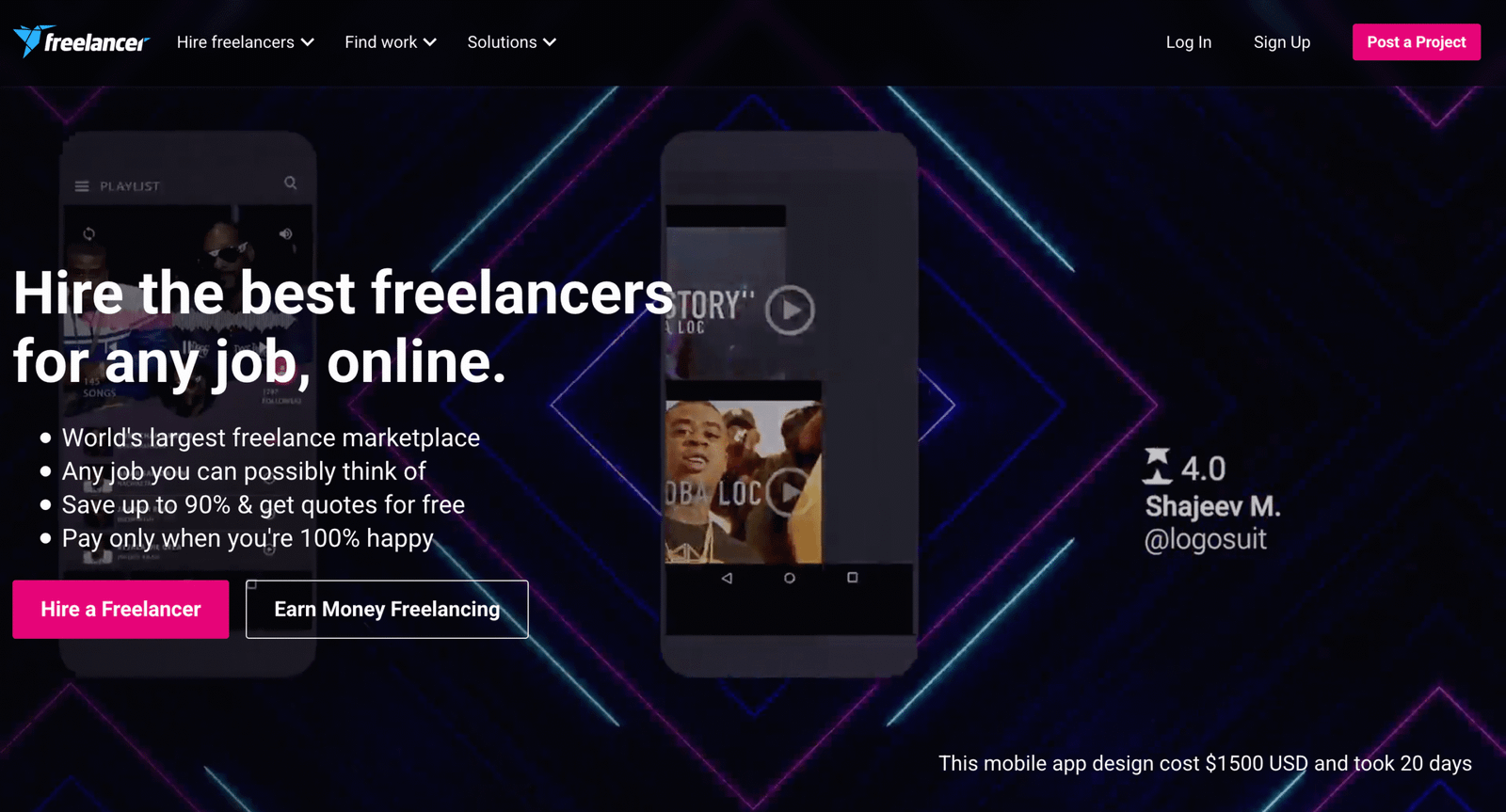
Freelancer.com follows the traditional bidding model.
Clients post projects, freelancers submit bids, and the client chooses who they want to work with. There are also contests for some categories.
Because the marketplace is large, there is usually plenty of work to browse, but that does not mean all of it is worth applying to.
This is where filtering becomes important. Some projects will have sensible scopes and budgets, while others may expect far too much for too little money.
For freelancers who do well with proposal-based marketplaces, it can be another channel for finding international work. I would just avoid turning bidding volume into the goal.
PeoplePerHour
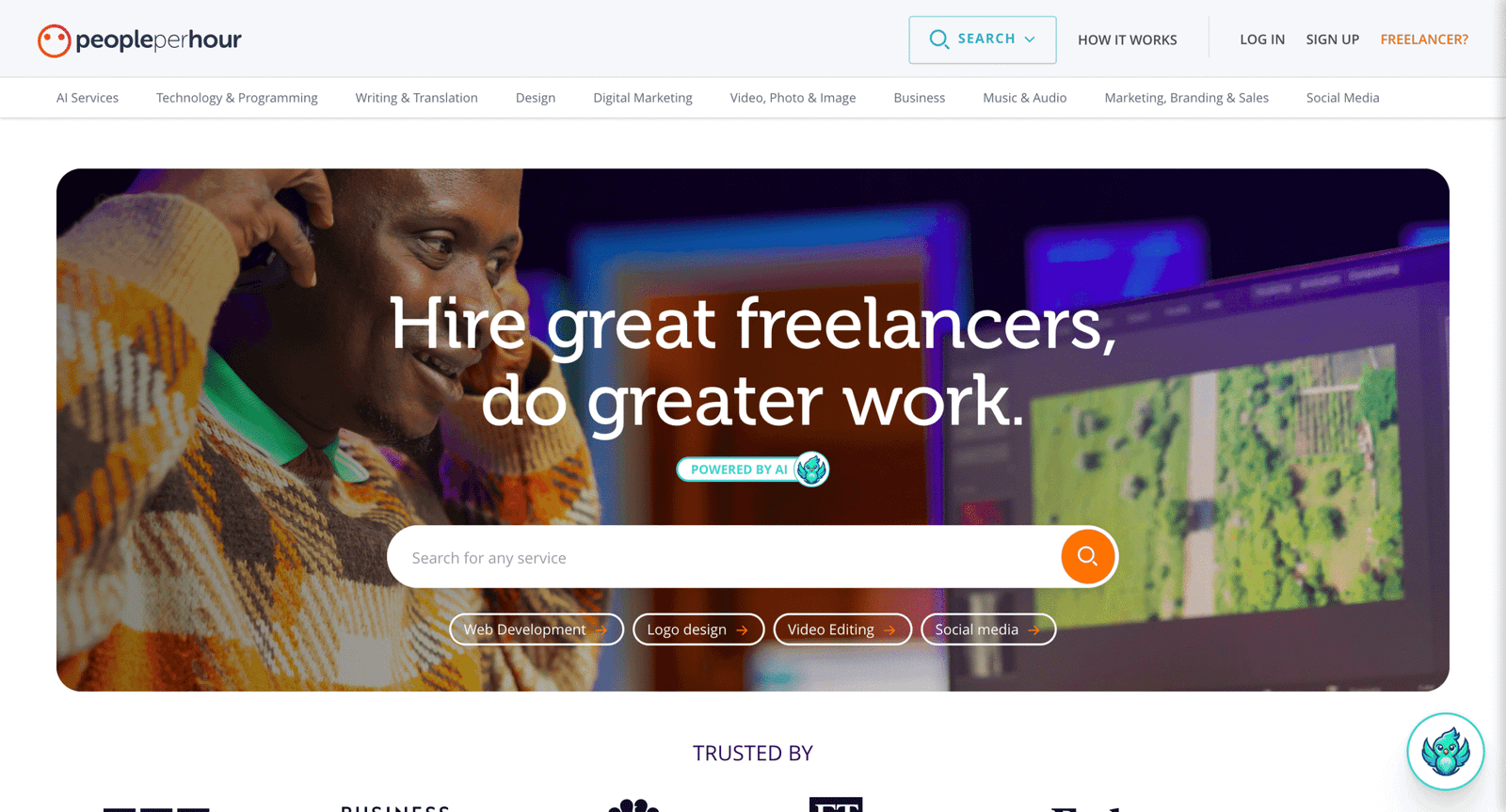
PeoplePerHour gives freelancers two ways to find clients.
You can respond to projects posted by businesses, or you can create predefined services that clients can purchase directly.
That makes it useful for freelancers whose work sits somewhere between custom projects and repeatable services.
The platform has historically had a stronger connection with the UK and European market, so it can be useful for Middle Eastern freelancers who want clients in those regions without relying only on US-focused marketplaces.
It probably will not be the first platform most freelancers in the Gulf think about, but it can add another client market once your main channels are already working.
LinkedIn is not a freelance marketplace, but ignoring it would leave out an important part of how professional freelance work actually happens in the Middle East.
A lot of projects start through relationships.
A startup in Dubai needs a designer. A Saudi company needs help with a product launch. An agency in Riyadh needs development support for a client. Someone leaves a company and later hires a former colleague independently.
Those opportunities do not always become public freelance listings.
LinkedIn is especially useful for consultants, developers, marketers, designers and other professionals whose clients are companies rather than individual consumers. A clear profile, visible work and a network around the industries you serve can gradually create direct enquiries.
That route takes more time than sending proposals to open projects, but it can also lead to stronger client relationships because you are not competing inside a marketplace every time.
Arabic-first or global freelance platforms?
This is probably the most useful distinction for freelancers in the Middle East.
If you want businesses in Saudi Arabia, the UAE, Egypt, Jordan and the broader Arabic-speaking market, Ureed, Mostaql and Khamsat give you access to clients and projects that are much closer to the region.
Language can be an advantage there rather than something you have to work around.
Global platforms give you something different.
Upwork, Fiverr, Toptal and Freelancer.com make the potential client market much larger, especially if you are comfortable working in English and collaborating across time zones.
There is no reason you have to choose only one side.
A freelancer in Jordan might find Arabic projects through Mostaql while working with a US client through Upwork. Someone in the UAE may build direct relationships on LinkedIn while also using Malt for professional assignments.
That mix becomes fairly normal once freelancing starts turning into a real business rather than an occasional side project.
The wider growth of independent work across different markets is something we look at separately in our report on the global rise of freelancing.
The UAE is a special case
The Middle East is not one freelance market, and the UAE is probably the clearest example of that.
A freelancer living in Dubai or Abu Dhabi needs to think about more than simply finding clients. Depending on how you are working and your residency situation, you may also need the right licence, permit or business setup.
GoFreelance is one of the routes available in Dubai for professionals who want to operate under a freelance licence. It is not a freelance marketplace, so I would not put it in the same category as Upwork or Ureed, but it can be relevant to the practical side of working independently in the UAE.
Its current programme includes freelance licensing and visa options for eligible professionals.
The right setup depends on what you do, where you live and whether you already have residency or employment, so this is one area where it is better to check current official requirements instead of relying on an old blog post.
Saudi Arabia, Qatar, Bahrain and other markets have their own rules too. “Freelancing in the Middle East” does not come with one regional legal setup.
Do you need Arabic to freelance in the Middle East?
Not necessarily.
A huge amount of business across places such as Dubai, Abu Dhabi and Doha happens in English, particularly in technology, finance, consulting, startups and multinational companies.
Arabic becomes a much stronger advantage when the actual work is tied to the regional audience.
Content, social media, translation, localisation, customer experience, research and marketing can all require a deeper understanding of the language and culture.
The same applies to client acquisition.
Someone targeting local Saudi businesses may get much more value from Arabic-first platforms and Arabic communication than someone building software remotely for an international company based in Dubai.
Treat language as part of the market you want to serve, not as a simple requirement for the entire region.
Which platform should you start with?
Start with the clients you want rather than the platform with the biggest name.
If your goal is Arabic-speaking businesses, look seriously at Ureed and Mostaql. If you have a smaller service that is easy to package, Khamsat may make more sense.
If international work is the goal, Upwork is one of the obvious places to learn. Fiverr can work well for packaged services, while experienced professionals may eventually find Malt or Toptal more relevant.
LinkedIn should probably sit somewhere in the background regardless, especially once you have enough work and experience for referrals and direct client conversations to matter.
You do not need profiles on every platform in this article. Pick a few that fit the kind of work you actually want and spend enough time on them to understand how clients behave there.
Final thoughts
The Middle East freelance market is interesting because regional and global platforms genuinely coexist.
Arabic-first marketplaces such as Ureed, Mostaql and Khamsat give freelancers access to businesses that may never post projects on a large international platform. Upwork and Fiverr open a much bigger global market. Malt and Toptal make more sense for certain experienced professionals, while LinkedIn can gradually turn an existing network into direct client relationships.
Where you live matters, but what you do and who you want to work with matter more.
A freelancer in Cairo, Dubai, Riyadh or Amman can all use the same global platform and still have completely different freelance businesses.
Choose the places where your clients are already looking, make it clear what you can actually help them with, and build from there.
If you also want to compare the bigger global options in one place, we’ve put together a separate guide to the best freelance websites to find work in 2026.