
Australia has a pretty broad freelance market, and that is exactly why a generic list of global websites is not very useful here.
Someone looking for remote design or development projects has completely different options from a tradie looking for local jobs, or someone who wants casual shifts around hospitality and events. Australia also has a few homegrown platforms that are genuinely important locally, alongside the big international marketplaces.
So rather than pretending all of these websites compete with each other, it makes more sense to look at the kind of work each one is actually built for.

Flexable
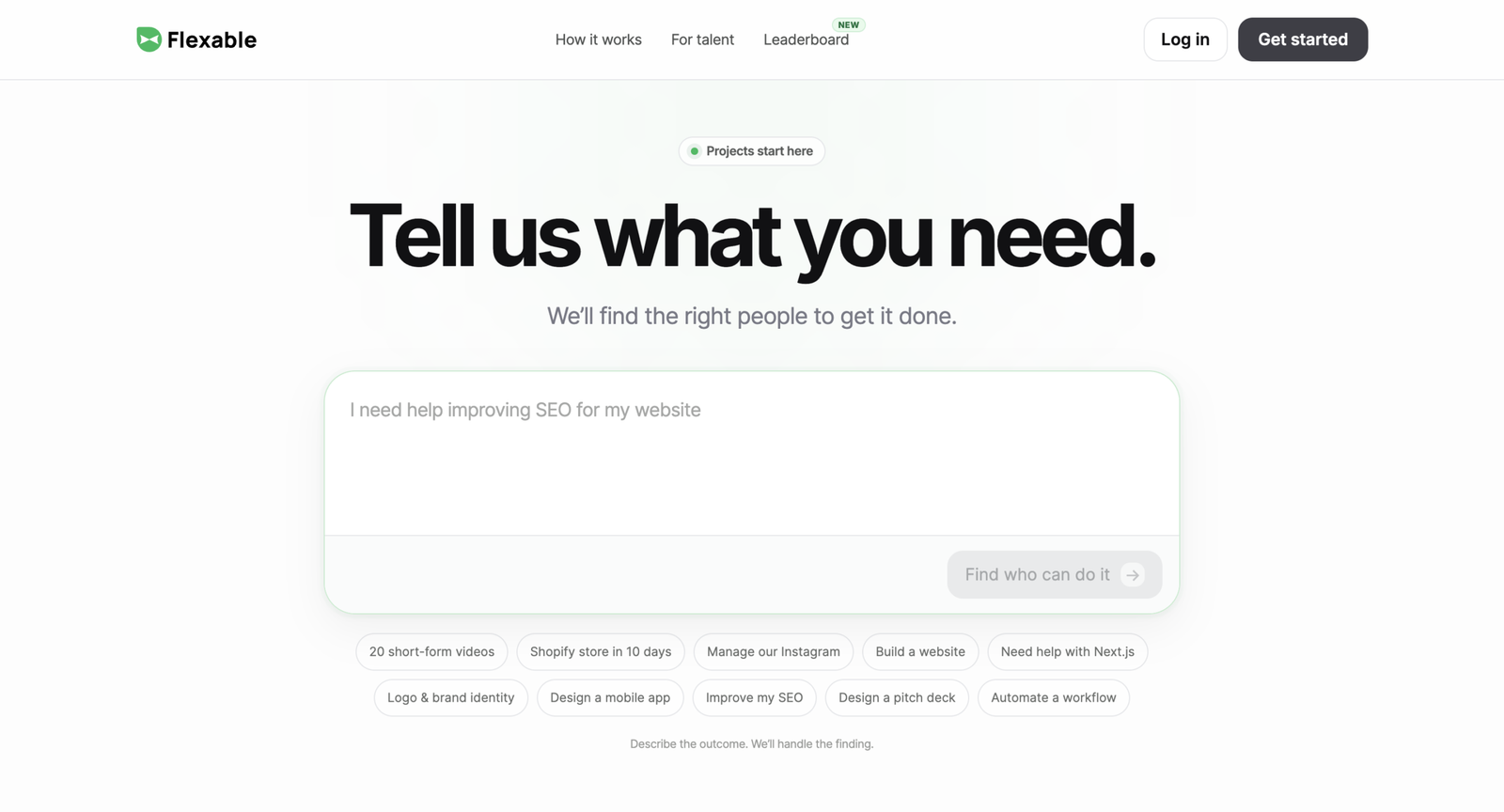
Flexable starts with the project rather than asking clients to work through a huge directory of freelancer profiles.
A client explains what they need, including the scope, budget and timeline, and relevant freelancers or teams can then be matched around that work. For freelancers, that means the profile still matters, but mostly as proof that you can handle the kind of project the client is bringing in.
The platform can also work for small teams and agencies, which becomes useful when a project needs several skills rather than one person trying to cover everything.
A developer may work alongside a designer, or a marketing project may need content, paid media and creative support around the same brief.
That project-first approach is part of how Flexable has changed from its earlier version. We explain the current model in FLXB 2.0: How Flexable Works Today.
Airtasker
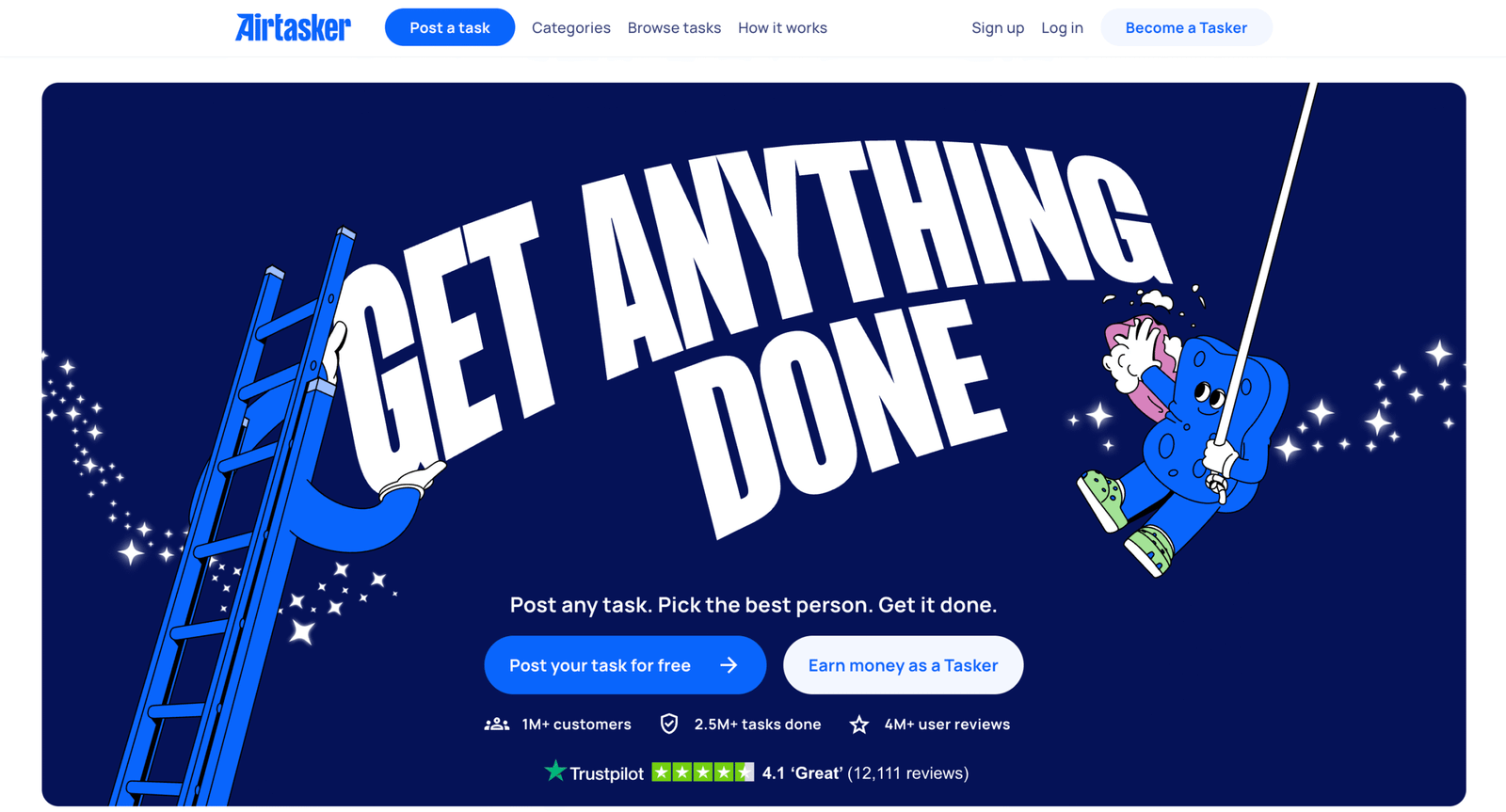
Airtasker is probably the clearest example of why Australian freelancing cannot be reduced to Upwork and Fiverr.
It started in Australia and is heavily built around tasks that often happen locally. That can include furniture assembly, removals, cleaning, gardening, repairs and other practical services, but the platform also carries work around photography, writing, design, web tasks and business support.
The important thing is that Airtasker feels much more local and task-led than a traditional professional freelance marketplace.
Someone in Sydney looking for help assembling furniture this weekend is solving a very different problem from a company looking for a product designer for three months.
For Australians whose skills involve physical or local work, Airtasker can therefore make much more sense than an international digital marketplace. It also gives people a relatively simple way to browse available tasks and choose work that fits their schedule.
Freelancer.com
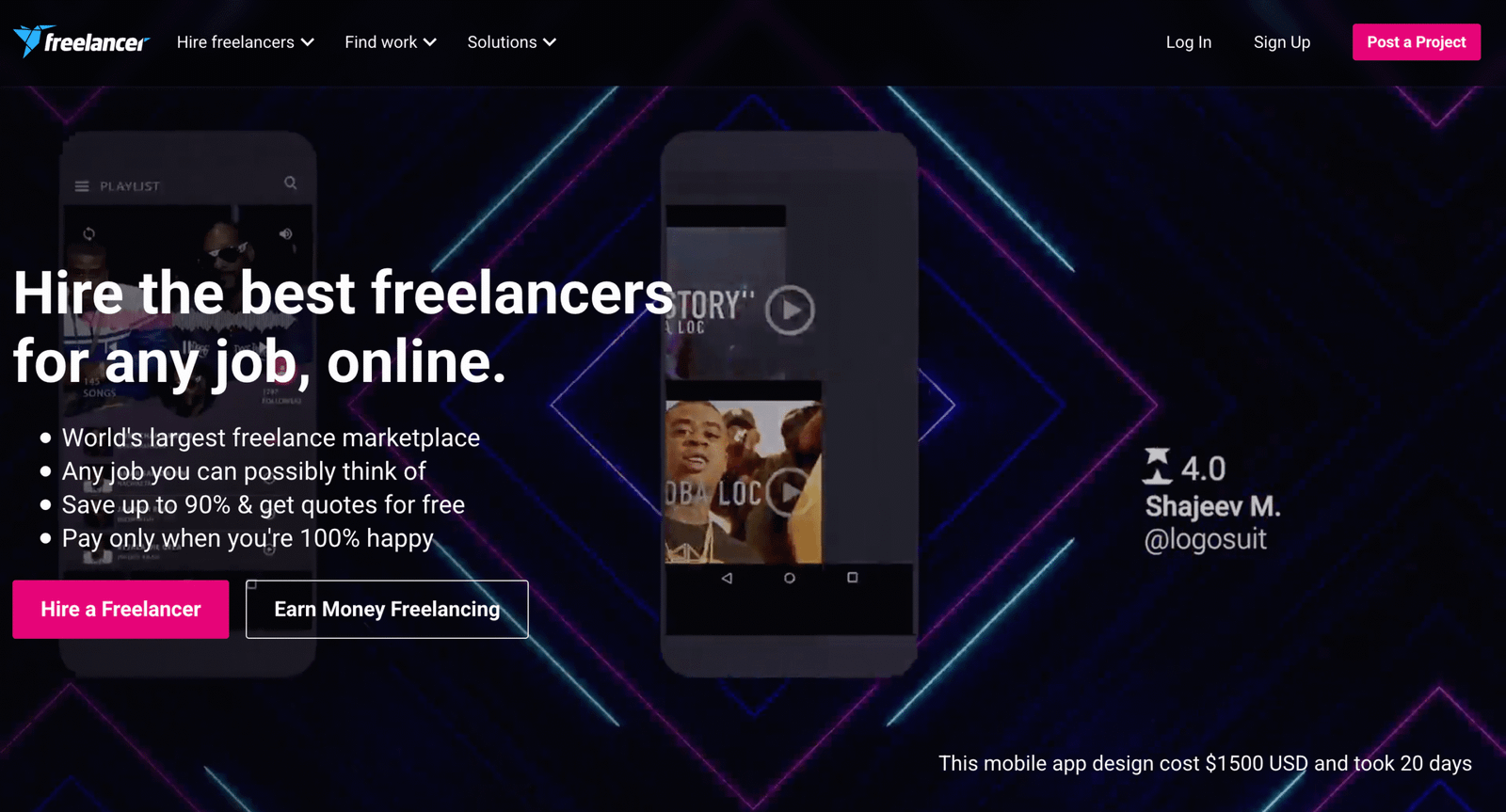
Freelancer.com has a particularly strong connection to Australia because the company was founded in Sydney.
It operates globally now, but Australian freelancers can use it to find both local and international projects across development, design, marketing, writing, engineering, administration and thousands of other skills.
The platform uses the traditional bidding model. A client posts a project, freelancers submit offers, and the client decides who they want to hire. There are also contests in some categories.
That creates plenty of opportunity, but it also means you need to filter carefully. Large bidding marketplaces inevitably contain both good projects and work where the budget does not really match what the client is asking for.
For someone comfortable sending proposals and competing for clearly defined projects, Freelancer.com remains one of the obvious Australian-connected platforms to understand.
OzLance
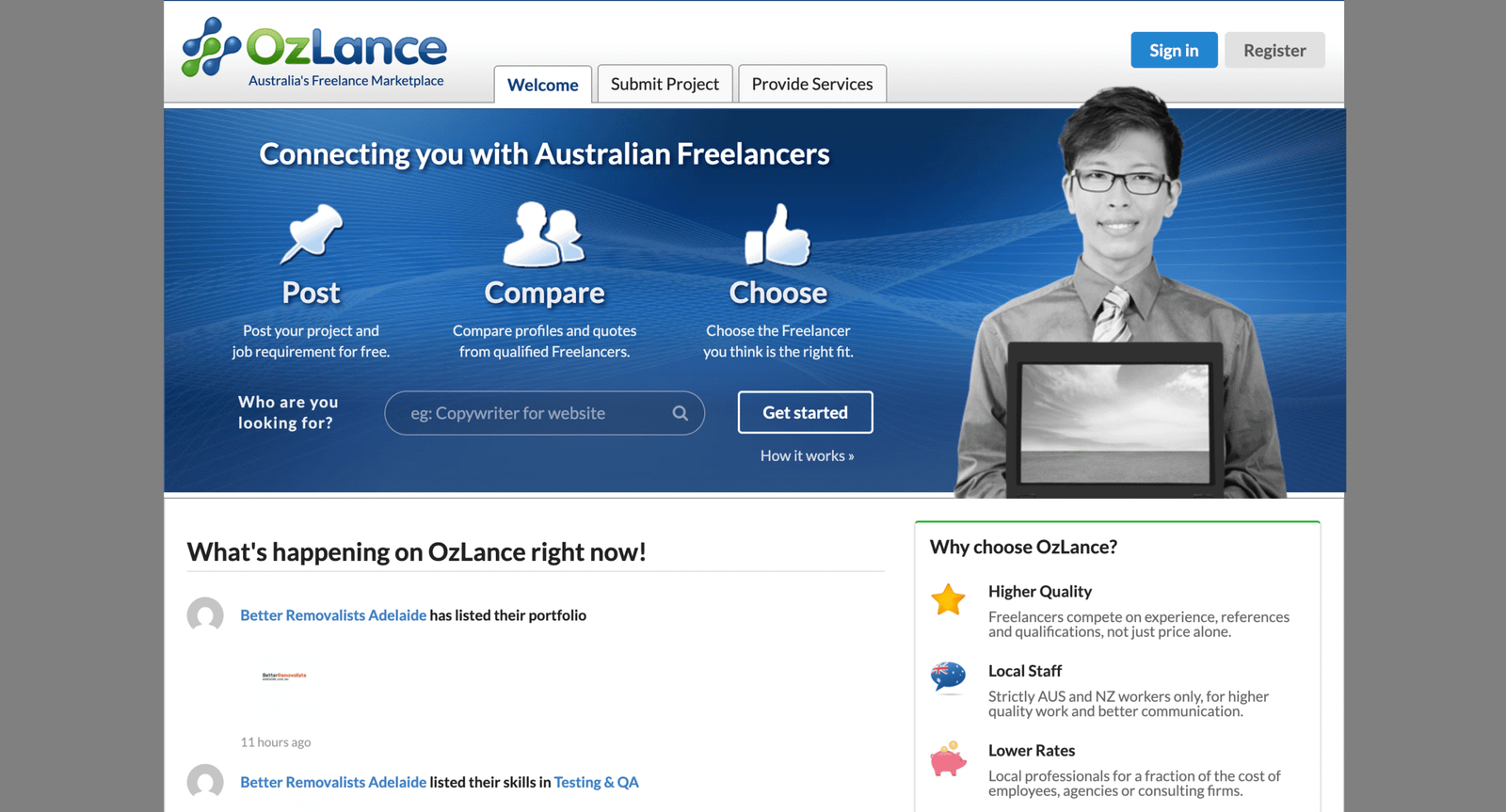
OzLance is much smaller, but the local focus is the reason it can still be useful.
It is built around Australian and New Zealand freelancers and tends to make more sense for digital and professional work such as development, design, writing and marketing.
A smaller marketplace will obviously have fewer projects than one of the global giants. That does not automatically make it worse.
If the projects are relevant and the clients specifically want Australian or New Zealand talent, you may be competing in a much narrower market.
For freelancers who particularly want local business relationships rather than a giant international project feed, it is worth checking what is active in your category.
Upwork
Upwork gives Australian freelancers access to a much larger international client market.
There is work across development, AI, design, marketing, writing, consulting, finance, customer support, data and a long list of other professional areas.
Some projects are small and clearly defined. Others can turn into relationships that continue for months.
The size of the marketplace is useful, but you are competing globally, so being specific about what you do becomes much more important.
A freelancer who clearly works on ecommerce analytics or SaaS product design is easier for a client to understand than someone whose profile lists ten unrelated services.
For Australians comfortable working across time zones, Upwork can be useful for reaching clients well beyond the local market.
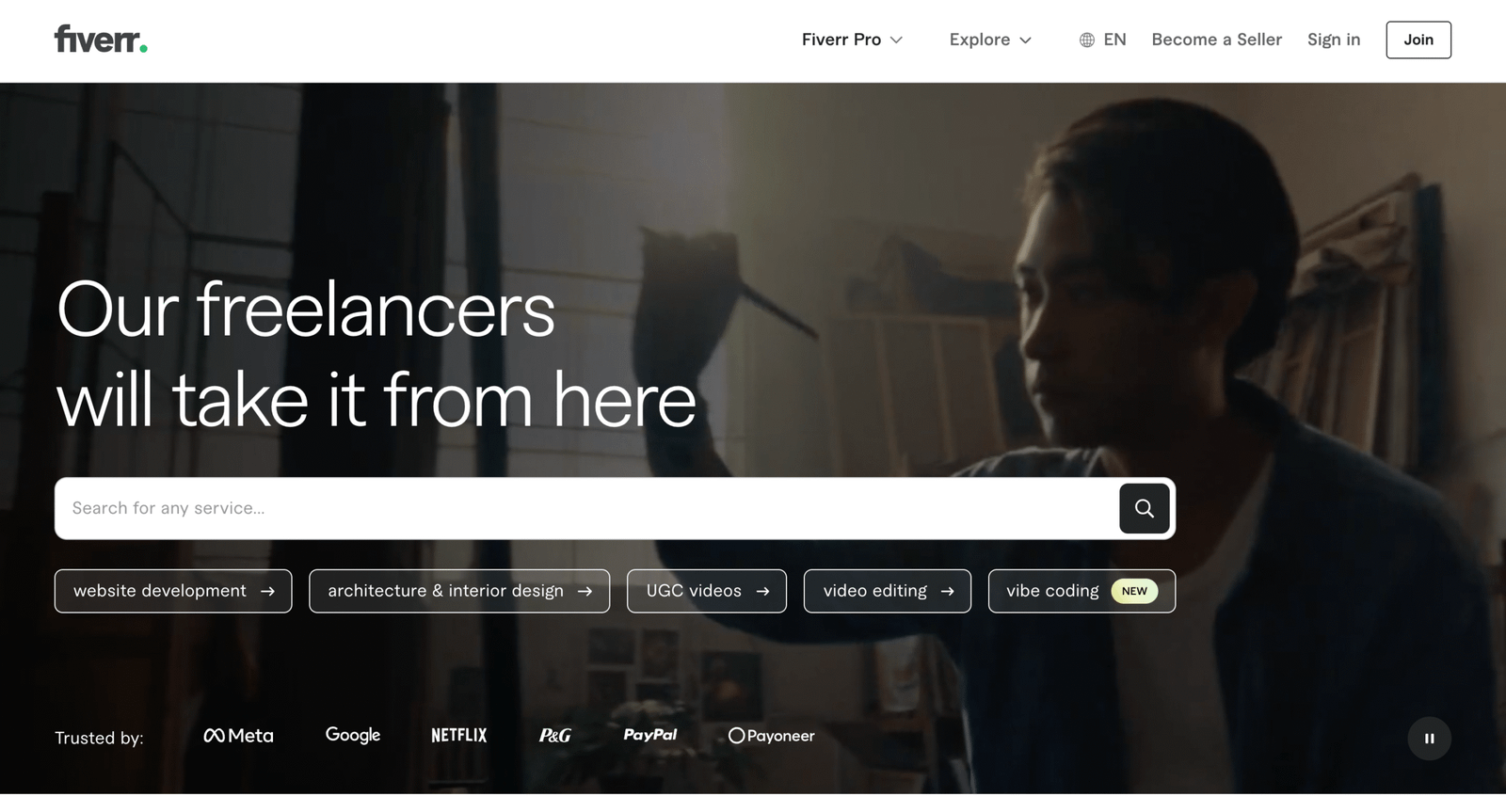
Fiverr
Fiverr makes the most sense when your work can be packaged into something a client understands quickly.
Instead of mainly applying to open projects, freelancers create services that clients browse and buy.
That works naturally for video editing, voiceover, design, animation, WordPress work, SEO services and other deliverables that can be described fairly clearly before the project begins.
It is less natural when the work needs several conversations just to understand what the client actually needs.
An Australian freelancer can use Fiverr without depending on the Australian market at all, which is part of the appeal. The client may be in the US, Singapore, Europe or almost anywhere else.
The challenge is standing out in popular categories without turning price into the only reason someone chooses you.
Contra
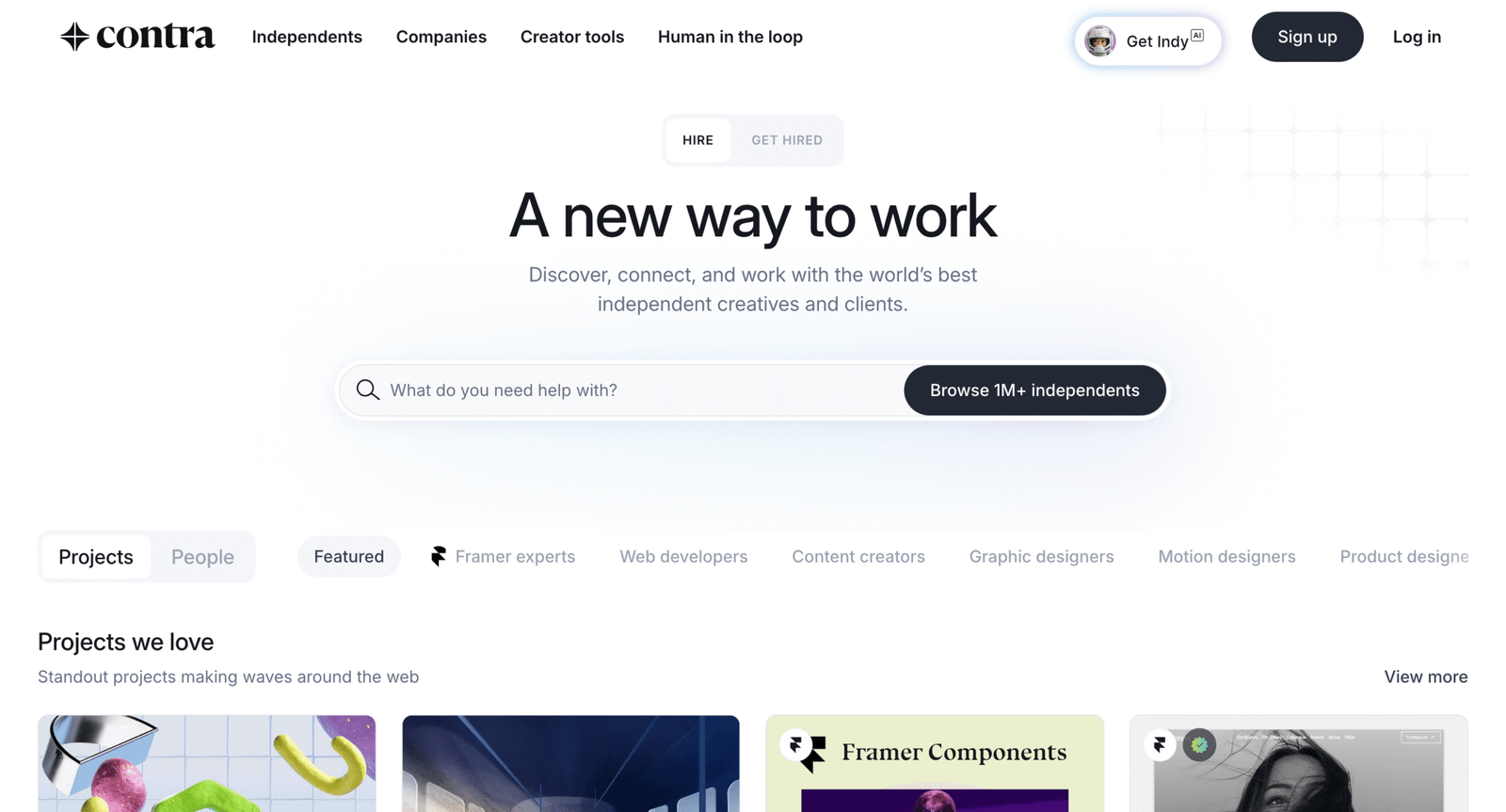
Contra is more portfolio-led than a traditional bidding marketplace.
Freelancers can show previous work, build a professional profile, find opportunities and manage client relationships without the whole experience revolving around sending bids to a public project feed.
That tends to suit designers, developers, marketers, creators and consultants whose previous work plays a big role in winning new business.
For Australian freelancers looking internationally, that can be useful because a strong portfolio travels well.
If a client can immediately see the quality and relevance of what you have done before, location becomes much less important.
Toptal
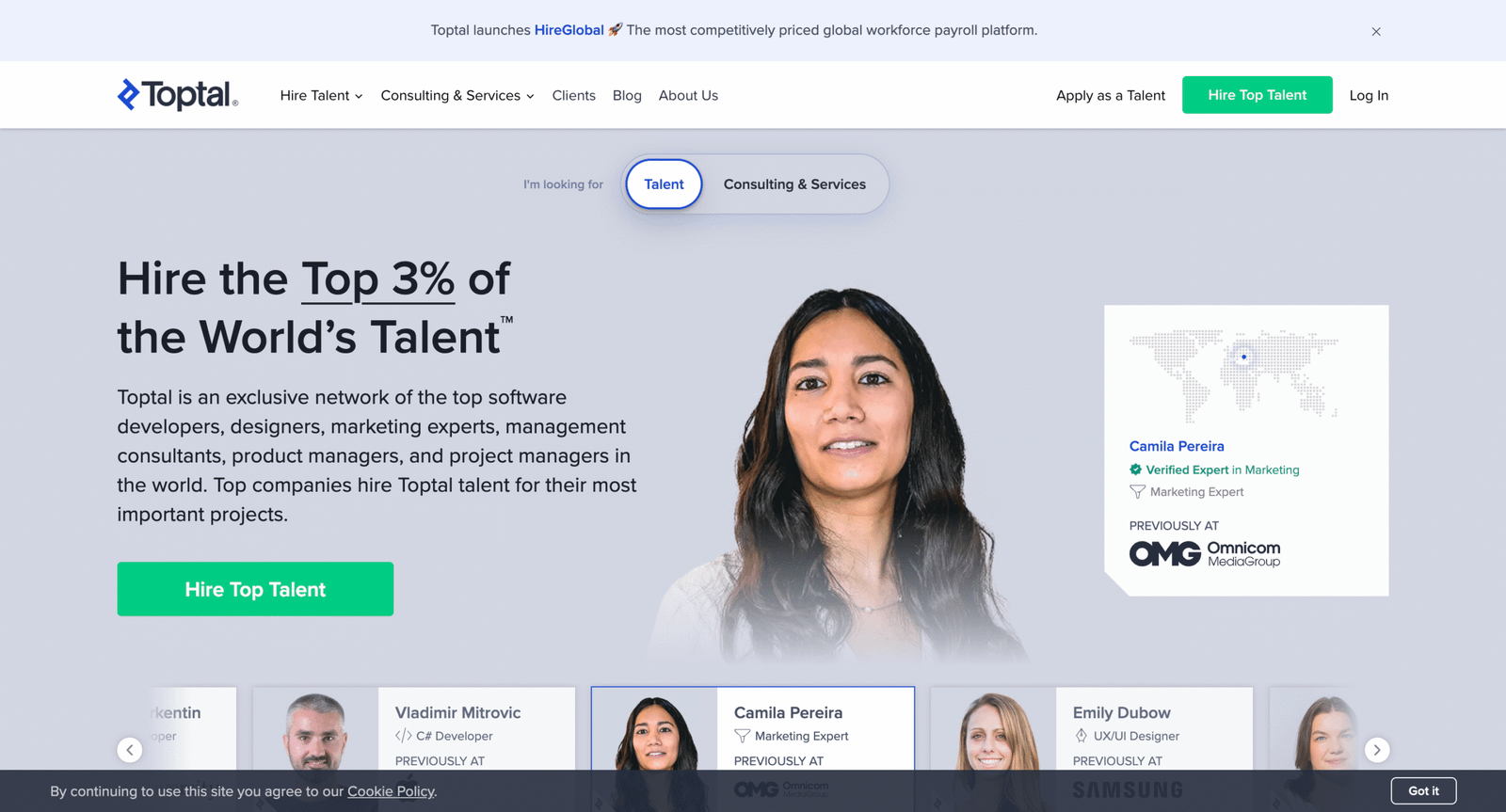
Toptal makes more sense for experienced professionals.
It uses a screening process before people enter its talent network and is particularly associated with areas such as software development, design, finance, consulting and project management.
That means it is not really built for someone who has just decided to try freelancing and needs a first small project.
For an experienced Australian developer, finance specialist or consultant who wants access to selective international work, it can become much more relevant.
The model is different from an open marketplace because getting accepted into the network is part of the process.
SEEK
SEEK is not a freelance marketplace, but leaving it out of an Australian guide would miss a large part of how freelance and contract work is actually found locally.
Australian companies regularly advertise freelance, contract and temporary roles through SEEK. Current listings span areas such as content, design, technology, administration and professional services.
These opportunities often look different from a normal freelance gig.
A company may need somebody for three months, six months or a defined project period rather than a single deliverable. You generally apply directly to the employer or recruiter and then handle the working relationship outside SEEK.
For professionals who prefer longer contracts over constantly finding small clients, that can be a much better model.
LinkedIn becomes more useful as your professional network grows.
A lot of freelance work never reaches a public marketplace. A former colleague needs someone for a project. An agency suddenly has too much work. A startup needs specialist help but is not ready to make another permanent hire.
Those situations usually start with somebody asking who they know.
That is why a clear LinkedIn profile can matter even if you never use its services features directly.
For Australian consultants, marketers, designers, developers and other professionals, relationships with former colleagues, agencies and clients can eventually produce more work than constantly checking freelance marketplaces.
It is slower to build, but direct relationships often become more valuable over time.

hipages
hipages belongs in a completely different category from Upwork or Contra.
It is built around Australian trades and home services, including areas such as plumbing, electrical work, building, painting, renovations and other practical jobs.
Clients post what they need and relevant tradespeople can connect with them around the work.
For someone doing digital marketing or software development, hipages is obviously not useful.
For an independent tradie trying to find more local customers, it is much closer to the actual market they work in.
That difference is important because “freelancer” in Australia can describe everyone from a UX designer working remotely to a self-employed tradesperson operating around one city.
Sidekicker
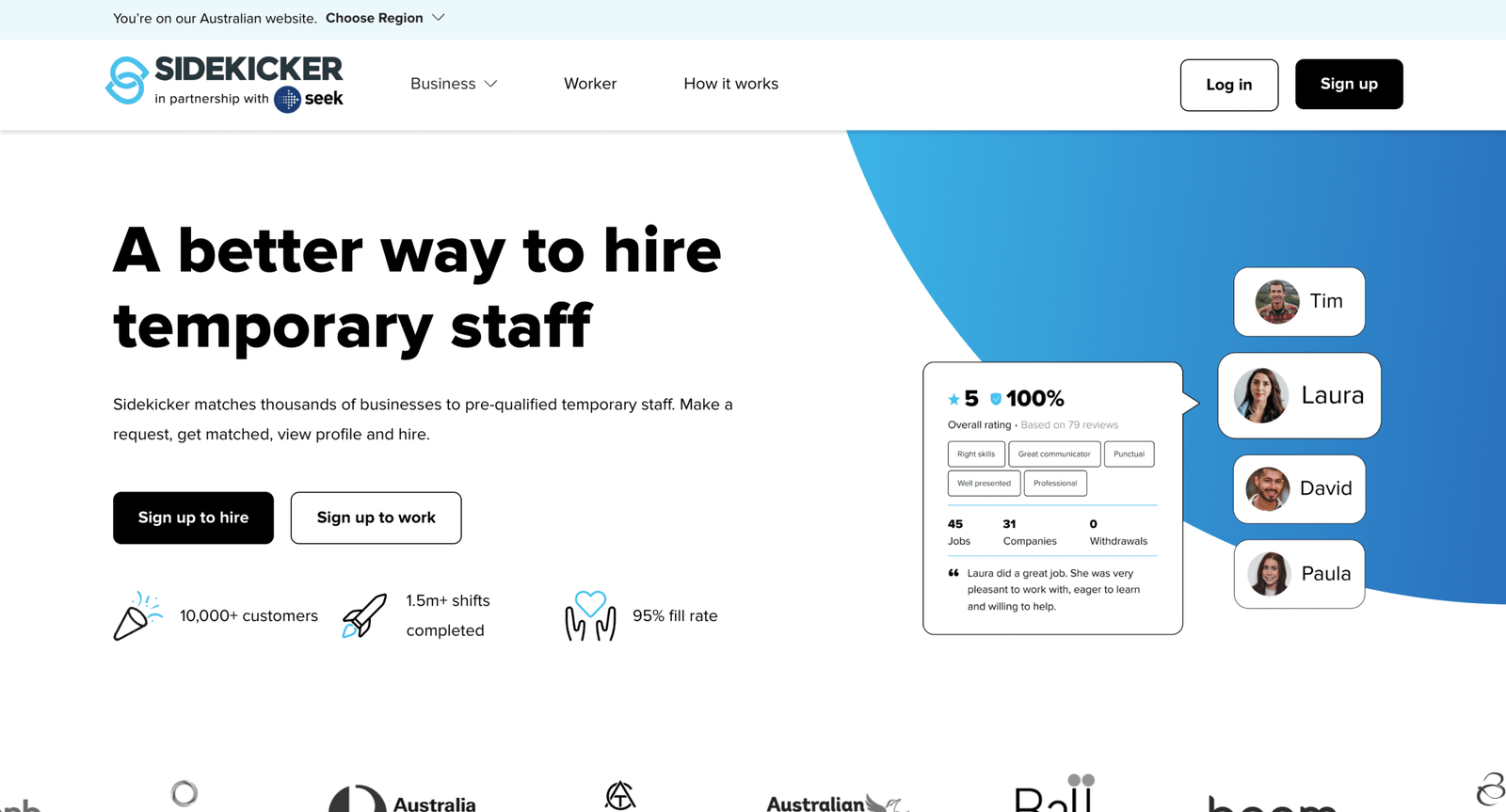
Sidekicker sits closer to flexible staffing than traditional freelancing.
It is used for temporary and casual work across areas such as hospitality, events, warehousing, administration and customer service.
The work is generally more shift-based than project-based, so somebody using Sidekicker is usually looking for a different kind of flexibility from someone building a freelance consulting business.
That still belongs in the broader independent-work conversation.
Not everyone looking for flexible work wants to build a personal brand, send proposals and manage clients. Some people simply want control over when they work and access to short-term opportunities with businesses.
For that type of work, Sidekicker makes much more sense.
Local work and remote freelancing are different markets
Australia makes this distinction especially obvious.
Airtasker and hipages are useful largely because the person doing the work is physically near the client.
Upwork, Fiverr and Contra work almost the opposite way. The project can often be delivered from anywhere, so the freelancer is competing internationally rather than locally.
SEEK and LinkedIn sit somewhere in between because they can lead to remote contracts, local assignments or direct professional relationships.
None of those models is automatically better.
A freelance developer in Melbourne may want international SaaS clients. A photographer may care much more about local businesses. A tradesperson in Brisbane needs customers close enough to actually travel to.
The right platform follows the kind of work.
Australian freelancers need to think about the business side too
Once freelance work starts producing regular income, the administrative side becomes part of the job.
The Australian Taxation Office makes it clear that money earned from services through digital platforms can still be assessable income, whether the work comes through a professional platform such as Upwork or a task-based service such as Airtasker.
That is worth remembering because money coming through an app or overseas marketplace does not somehow sit outside the normal tax system.
Your employment status also matters. Having an ABN does not automatically make someone an independent contractor, and the ATO specifically warns that the actual working arrangement determines whether somebody is an employee or contractor.
If freelancing becomes regular, keep proper records of payments, platform fees and relevant expenses from the beginning. For your own circumstances, use current ATO guidance or speak with a qualified professional rather than relying on old freelancer advice.
Australian clients or international clients?
There is no reason you need to choose only one.
Local clients can be easier because you share working hours, currency and business context. If you sometimes need to meet in person, being in the same city can obviously matter too.
International work gives you access to a much bigger client market.
An Australian designer can work with a company in Singapore, a developer in Sydney can work with a US startup, and a consultant in Melbourne can have clients across several countries without changing much about how the service is delivered.
A lot of freelancers eventually end up with a mixture of both.
The broader move toward cross-border independent work is something we also look at in our report on the global rise of freelancing.
Which freelance platform should you start with in Australia?
Start with what you actually want to do.
If you want digital international projects and are comfortable writing proposals, Upwork or Freelancer.com are obvious places to understand. Fiverr works better when you can package your service clearly, while Contra becomes interesting when your portfolio already does a lot of the selling.
For local task-based work, Airtasker is playing a completely different role. Tradies may get much more value from hipages, while Sidekicker makes sense for flexible shift-based work.
If what you really want is a longer professional contract, check SEEK and LinkedIn rather than assuming every freelance opportunity sits on a traditional marketplace.
You do not need profiles everywhere. A few channels that genuinely fit your work are much easier to manage than ten accounts you barely use.
Final thoughts
Australia has a good mix of local and international ways to find freelance work.
Airtasker is deeply tied to the local task economy. Freelancer.com has Australian roots but gives you a global market. SEEK can surface professional contract work that never appears on a traditional freelance marketplace, while Upwork, Fiverr, Contra and Toptal open access to clients well beyond Australia.
The important part is not finding the platform with the biggest name. It is finding the place where the clients you actually want are already looking for the kind of work you do.
If you are still getting familiar with independent work itself, our guide to what freelancing is and how it actually works covers the basics.
And if you want to compare the bigger global options in one place, we’ve put together a separate guide to the best freelance websites to find work in 2026.