
Before Flexable became what it is today, there was FLXB 0.1.
It was our first real version of the idea.
At the time, we kept coming back to the same problem. There were already plenty of places to find freelancers. That part wasn’t new.
What felt much less solved was everything after the search.
You might find a developer who looks right on paper, but how do you know they are the right fit for the project? What happens when you need a designer and a marketer too? Who keeps everyone aligned once the work starts?
Most freelance platforms were good at making the introduction. A client posted a requirement, freelancers applied, somebody got hired, and from there the client largely managed the rest.
We thought there was room to do more than that.
FLXB 0.1 was our first attempt.
Historical note: This page reflects Flexable as it existed when FLXB 0.1 launched in 2024. The platform has changed considerably since then, so some of the features, workflows, and numbers below are historical.
What we were trying to solve
From the beginning, Flexable had three sides to it.
There were businesses looking for specialist help.
There were freelancers trying to show clients what they could actually do.
And there were agencies that made more sense when a project was too large or too complicated for one person.
We didn’t think those needed to live in completely separate systems.
Sometimes a company needs one developer for a short piece of work. Sometimes it needs a designer, developer, writer, and marketer working together. Sometimes the sensible answer is simply to bring in an agency.
The project should decide the setup, not the marketplace.
That idea shaped a lot of FLXB 0.1.
What FLXB 0.1 actually included
The first release wasn’t complicated. We focused on a handful of things we thought mattered most.
1. Curated freelancer discovery
We didn’t want Flexable to become another giant page of profiles that clients had to dig through themselves.
So freelancers were organized around skills, categories, and locations to make the search more useful.
At launch, the network included more than 19,800 freelancers across development, AI, digital marketing, design, and other professional services.
That was the number at the FLXB 0.1 stage. It shouldn’t be read as Flexable’s current network size.
The thinking was fairly straightforward.
If a business already knows it needs a certain type of specialist, the platform should help narrow the field instead of creating more noise.
The goal wasn’t to show a client everyone.
It was to help them get closer to the people who actually made sense for the work.

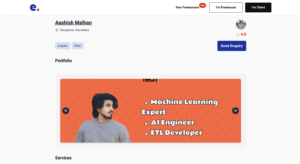
2. Freelancer portfolio pages
We also knew that a list of skills wasn’t enough.
Anyone can write “experienced designer” or “expert developer” on a profile. That doesn’t tell a client much.
So we gave freelancers space to show previous work, professional experience, skills, and other evidence that could help a client understand what they had actually done.
That idea has stayed with us.
Good freelancers shouldn’t have to rely on adjectives to sell themselves. Their work should do some of that job for them.
3. Agency profiles
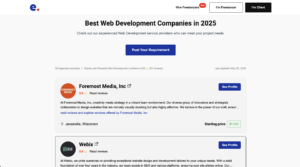
We included agencies from the start because plenty of projects simply don’t fit neatly into a one-freelancer model.
At the time, Flexable had more than 1,500 agency partners across technology, creative work, marketing, and related services.
That meant a client wasn’t forced to piece together a team of individual freelancers when an established team made more sense.
A landing page redesign might need one person.
A product launch might need several.
A larger software project may need a team that already knows how to work together.
We wanted Flexable to support all three situations.
4. Managed project execution
This was probably the part we cared about most.
Finding somebody is only the beginning of a project.
Once work starts, timelines change. Feedback gets spread across messages. One person finishes late and somebody else gets blocked. Scope changes. Decisions get missed.
And before long, the client who wanted outside help ends up managing the whole thing.
We didn’t want Flexable to disappear from the process once the introduction had been made.
FLXB 0.1 started experimenting with a more managed model, where account support could help with communication, milestones, and keeping the project moving.
That became an important part of how we thought about the company.
Finding the right people matters.
Making the work actually happen matters just as much.
What made the model different
When we first wrote about Flexable, it was easy to reach for the usual startup words: faster, seamless, scalable, revolutionary.
Looking back, those words weren’t particularly useful.
The difference we were trying to build was much more practical.
On a traditional freelance marketplace, the process often looked something like:
Post a requirement → receive applications → choose someone → manage the project yourself
We wanted Flexable to be able to support more of the journey:
Understand the requirement → find the right person or team → set up the work → coordinate delivery → complete the project
It’s a much harder thing to build than a directory of freelancers.
It was also the part of the problem we found most interesting.
Who we built it for
Startups
Startups rarely have every skill they need sitting inside the company.
One month the gap might be product design. The next month it might be development, paid acquisition, content, analytics, or video.
Hiring a permanent employee every time a new requirement appears doesn’t always make sense.
We wanted Flexable to give smaller teams another option.
Growing companies
Larger businesses usually have a different problem.
They may already have good internal teams but need extra capacity for a few months, a particular specialist, or an outside team to deliver something the company doesn’t want to build internally.
For them, the problem isn’t simply finding a freelancer.
It’s finding somebody credible without creating even more work for the team that hired them.
Independent professionals
For freelancers, we wanted the profile to become more than an online résumé.
The idea was to make it easier to show the work behind the skills and give potential clients enough context to decide whether somebody might be a good fit.
That thinking eventually went much further than the original FLXB 0.1 profiles, but this is where it started.
Agencies
Agencies were part of Flexable from the beginning for a simple reason: sometimes a team is the better answer.
A specialist agency may already have the designer, developer, strategist, or marketer needed for a larger piece of work.
There was no reason for Flexable to pretend every independent project had to be delivered by one independent person.
What we thought would come next
FLXB 0.1 was always meant to be the first version, not the finished product.
At the time, we were thinking about areas such as:
- smarter talent matching,
- better ways for people to collaborate around projects,
- improved talent discovery,
- and expanding Flexable into more markets.
Some of those ideas eventually changed shape. Some became part of later versions of the product. Others led us in directions we hadn’t anticipated when 0.1 went live.
That is one reason we’ve kept this page.
It is useful to look back at what we thought mattered at the beginning and compare it with what we know now.
What FLXB 0.1 taught us
One thing became obvious fairly quickly.
Having more profiles does not automatically make a marketplace more useful.
Clients still have to work out who is credible, who understands the brief, who is available, who fits the budget, and who they would actually trust with the work.
Freelancers have their own version of the same problem.
They need to know which opportunities are worth chasing, whether the client is serious, how to show that they are a good fit, and whether spending another hour writing a proposal is likely to lead anywhere.
A huge directory doesn’t solve those problems by itself.
FLXB 0.1 was where we started figuring that out.
Additionally, Flexable has recently launched a Chrome extension to provide quick and easy access to its talent pool.
Want to see how the idea evolved? Read FLXB 2.0: How Flexable Works Today.