
Singapore is a small market geographically, but freelancers here have access to a surprisingly wide mix of work.
You can look locally, across Southeast Asia, or internationally without changing much about how you actually deliver the work. A developer in Singapore might work with a startup in Indonesia, a marketing consultant may work with a local SME, and a designer may get most of their projects from clients in the US or Europe.
That is why “best freelance website” is not really one question.
Some platforms are built around client projects. Some are better for contract roles. Others help with direct relationships or local flexible work. The right one depends on the kind of freelance career you are trying to build.

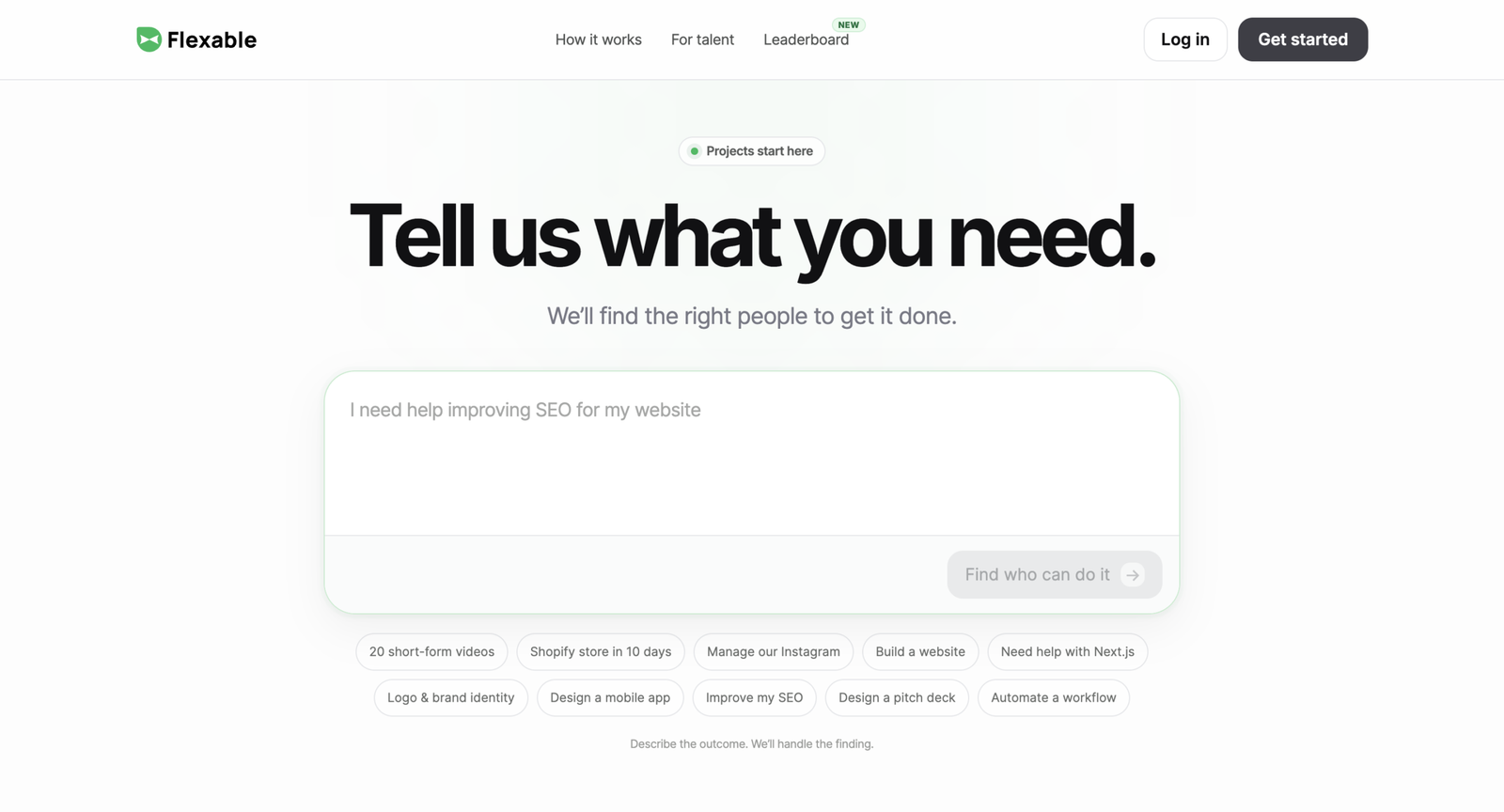
Flexable
Flexable starts with the project rather than asking a client to search through a huge list of freelancer profiles.
A client explains what they need, including the scope, budget and timeline, and relevant freelancers or teams can then be matched around that work. For freelancers, that puts more value on showing what kind of projects you can genuinely take ownership of rather than filling a profile with every skill you have ever used.
The platform can also support small teams and agencies, which becomes useful once the work is too large for one person. A developer may need a designer alongside them, or a marketing project may need several specialists rather than one generalist trying to cover everything.
That project-first approach is part of how Flexable has evolved. We explain the current model in FLXB 2.0: How Flexable Works Today.
Glints
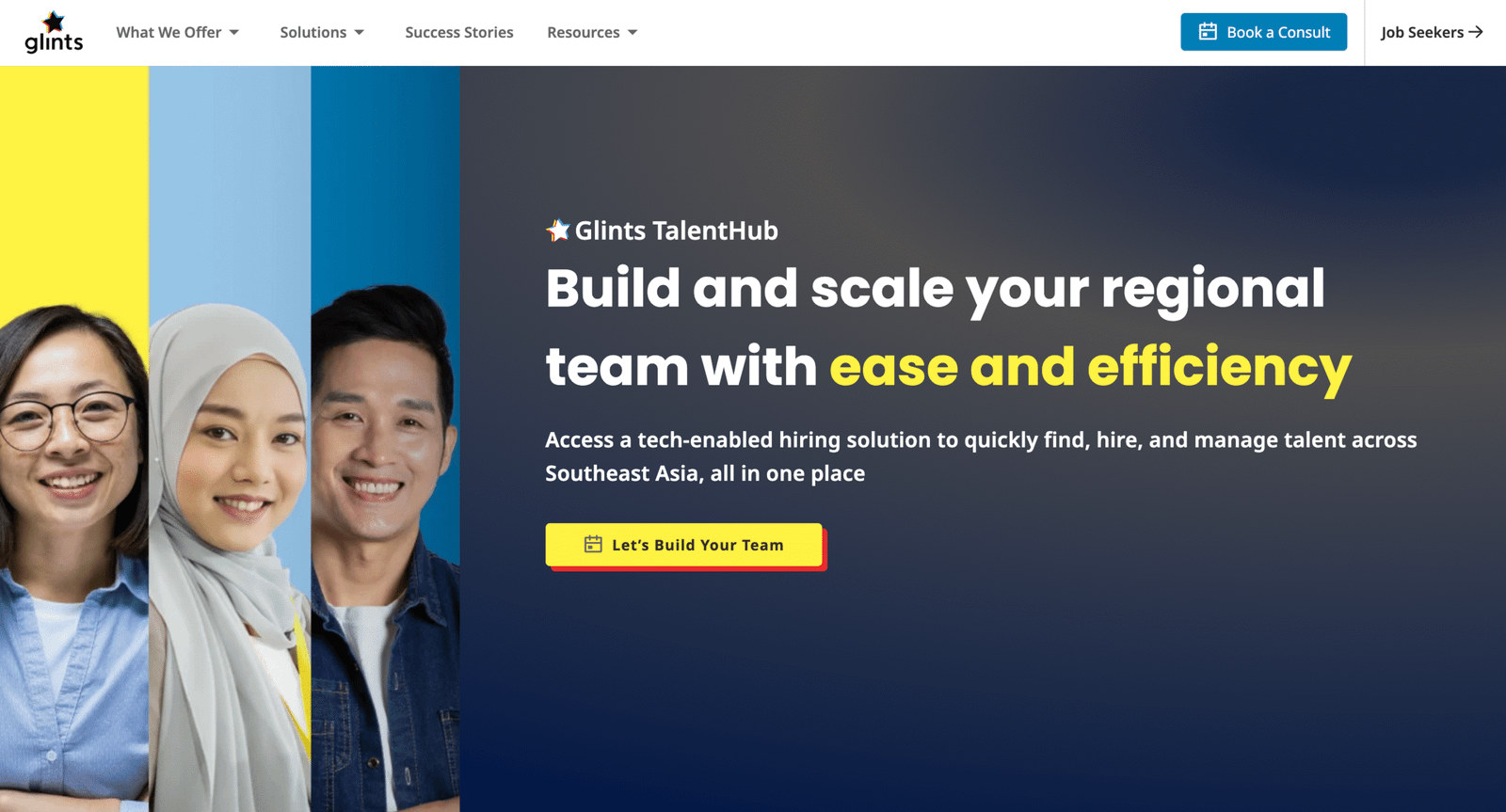
Glints is one of the more relevant local and regional options because it sits directly inside the Southeast Asian hiring market.
It is not a pure freelance marketplace. You will find full-time roles alongside contract, part-time, internship and freelance opportunities. That makes it useful for people who are open to different working arrangements rather than only small project-based gigs.
For Singapore-based freelancers, the regional reach is probably the biggest reason to use it. Companies across Singapore and Southeast Asia use Glints for hiring, so you can find local opportunities without limiting yourself to one city or one kind of employer.
If you are looking for something longer than a one-off project, especially in marketing, tech, operations, design or business roles, Glints can be more useful than a marketplace built around tiny tasks.
JobStreet Singapore
JobStreet is another platform that makes more sense when you think beyond the classic freelance marketplace model.
Singapore companies actively advertise freelance, part-time, casual and contract roles there, including work across marketing, technology, research, creative services and administration.
That means you may find opportunities that look more like a three-month contract or recurring freelance arrangement than a small project with milestones.
For someone who wants a bit more continuity, that can actually be a better fit.
You are usually applying directly to the company rather than working through a marketplace payment system, so the client relationship, contracts and invoicing may sit outside JobStreet itself.
Upwork
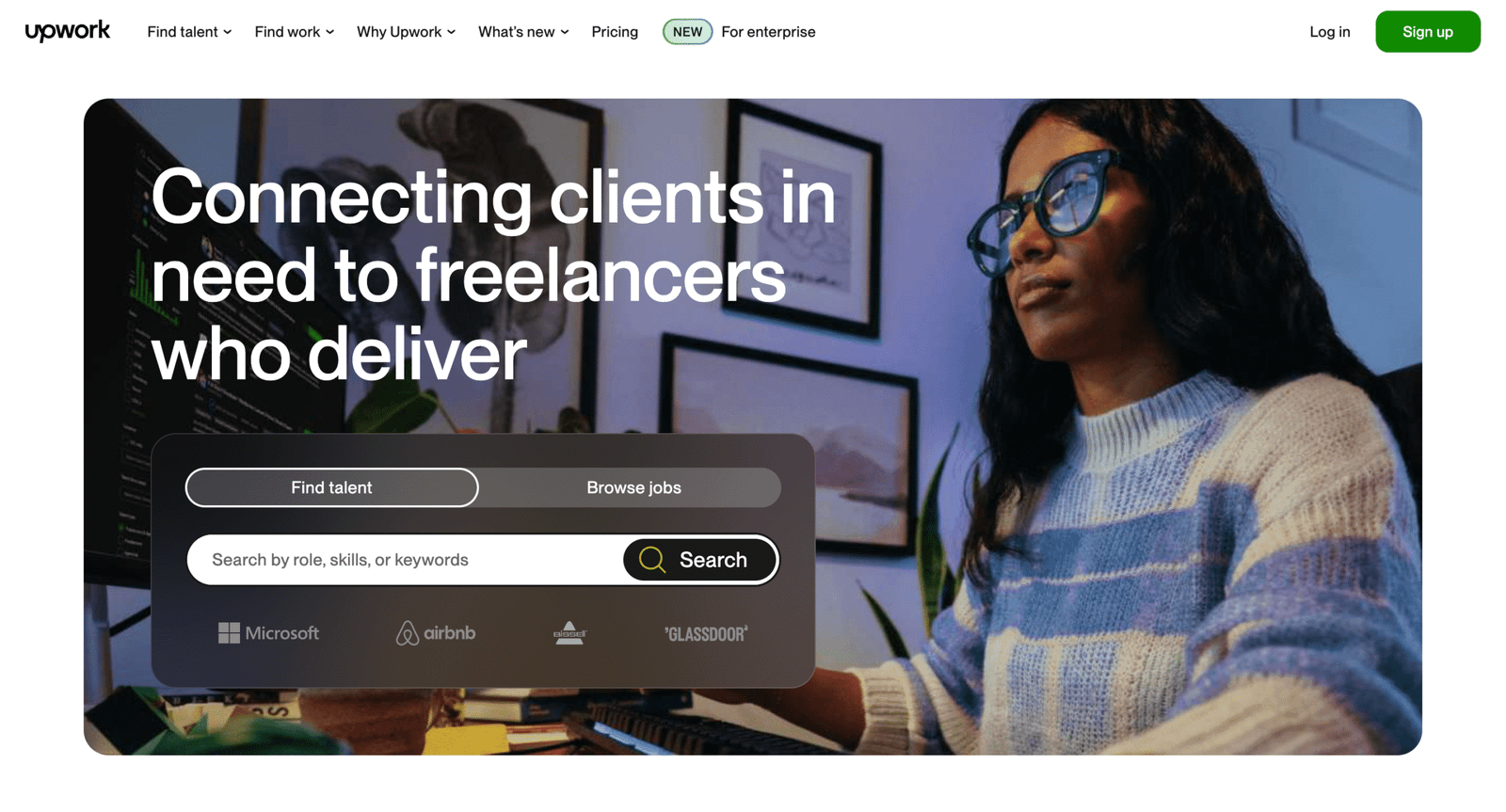
Upwork gives Singapore freelancers access to a much larger international market.
You can find projects across development, AI, design, marketing, writing, finance, consulting, customer support and many other areas. Some are quick pieces of work, while others turn into ongoing relationships that last for months.
The scale is useful, but it also means you are competing globally.
That makes clear positioning important. A freelancer who specialises in B2B SaaS product design is easier for a client to understand than someone whose profile simply lists design, marketing, development and content together.
For Singapore-based professionals who are comfortable working across time zones and want clients outside the local market, Upwork is still one of the main platforms worth understanding.
Fiverr
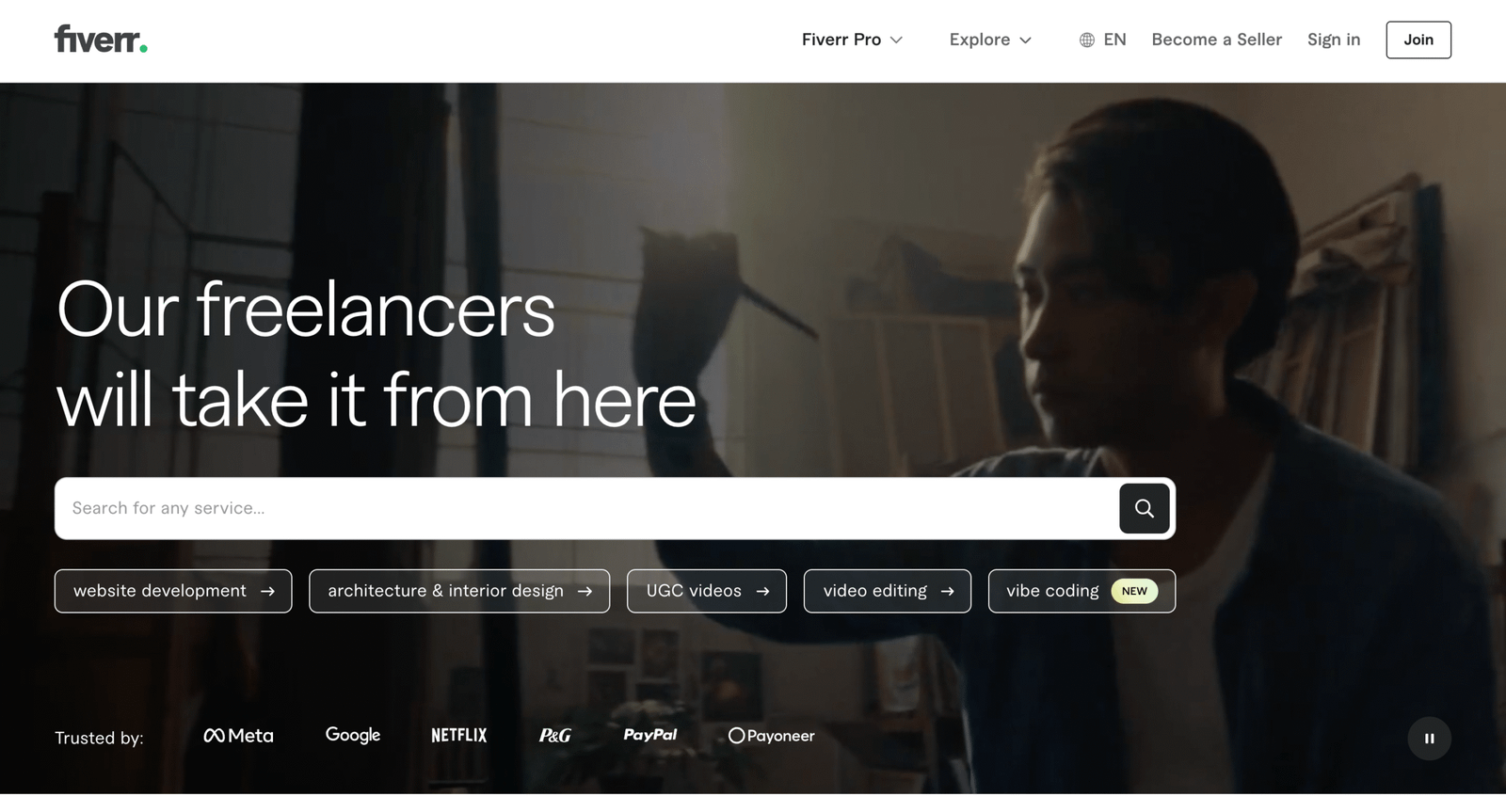
Fiverr works differently because freelancers create services that clients can discover and buy.
That suits work that can be explained clearly upfront.
Video editing, logo design, animation, voiceover, SEO services, WordPress fixes and other defined deliverables all fit naturally because the client understands roughly what they are buying before starting the conversation.
The model becomes less useful when every project is completely custom and needs a lot of discovery before anyone can agree on the scope.
For Singapore freelancers who can package their work clearly, Fiverr can open access to a global client base without requiring constant applications to open projects.
Contra
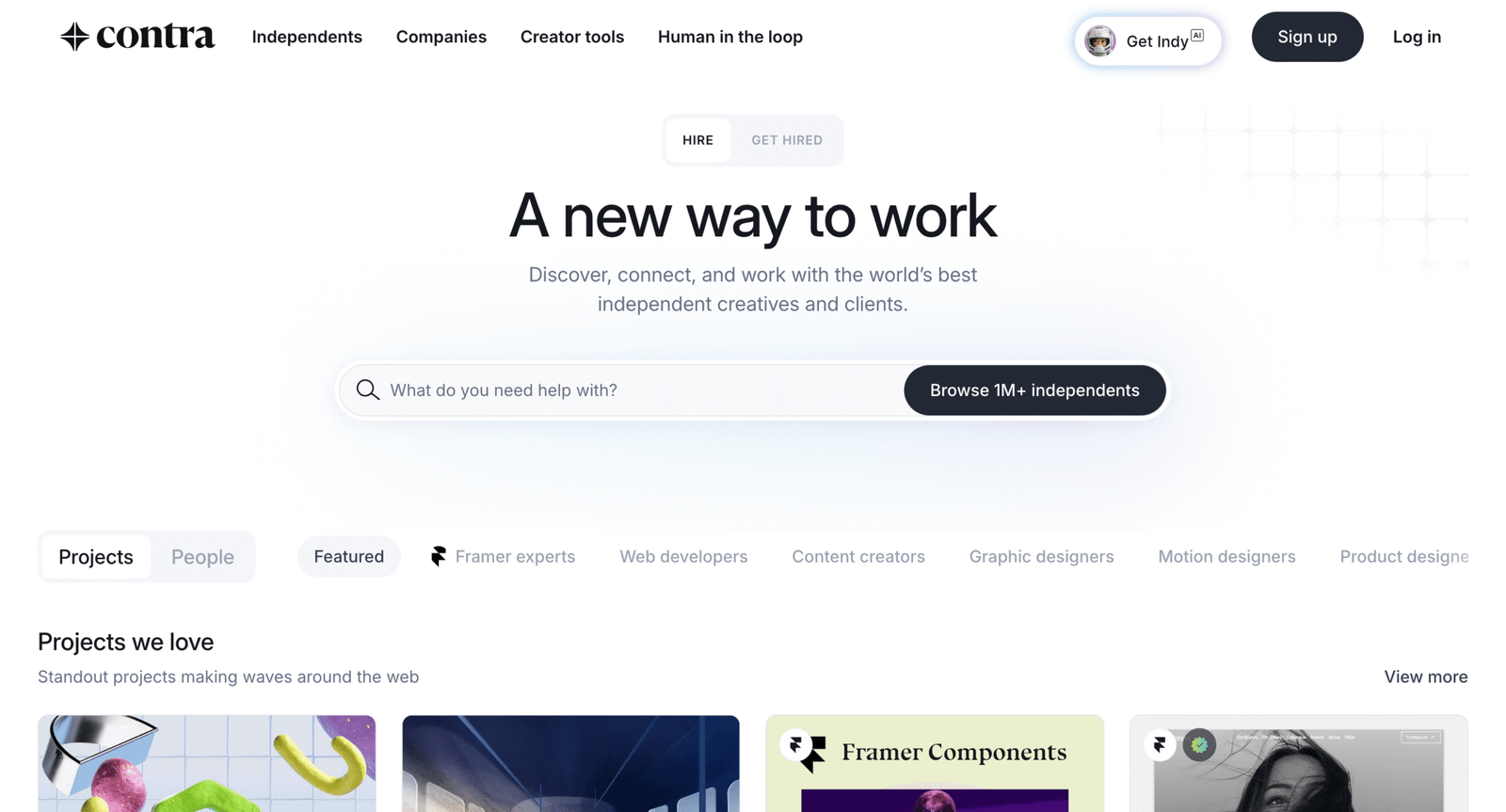
Contra is more portfolio-led than most traditional marketplaces.
It combines professional profiles, portfolios, freelance opportunities and project tools in a way that puts more emphasis on how your work looks and how you position yourself.
That tends to suit designers, developers, marketers, consultants and creators who already have enough work to show a potential client what they are good at.
For Singapore-based freelancers trying to work internationally, that can be useful because location becomes less important when your portfolio already gives the client confidence.
You are not relying entirely on proposal volume. Your professional presence is doing part of the selling.
Freelancer.com
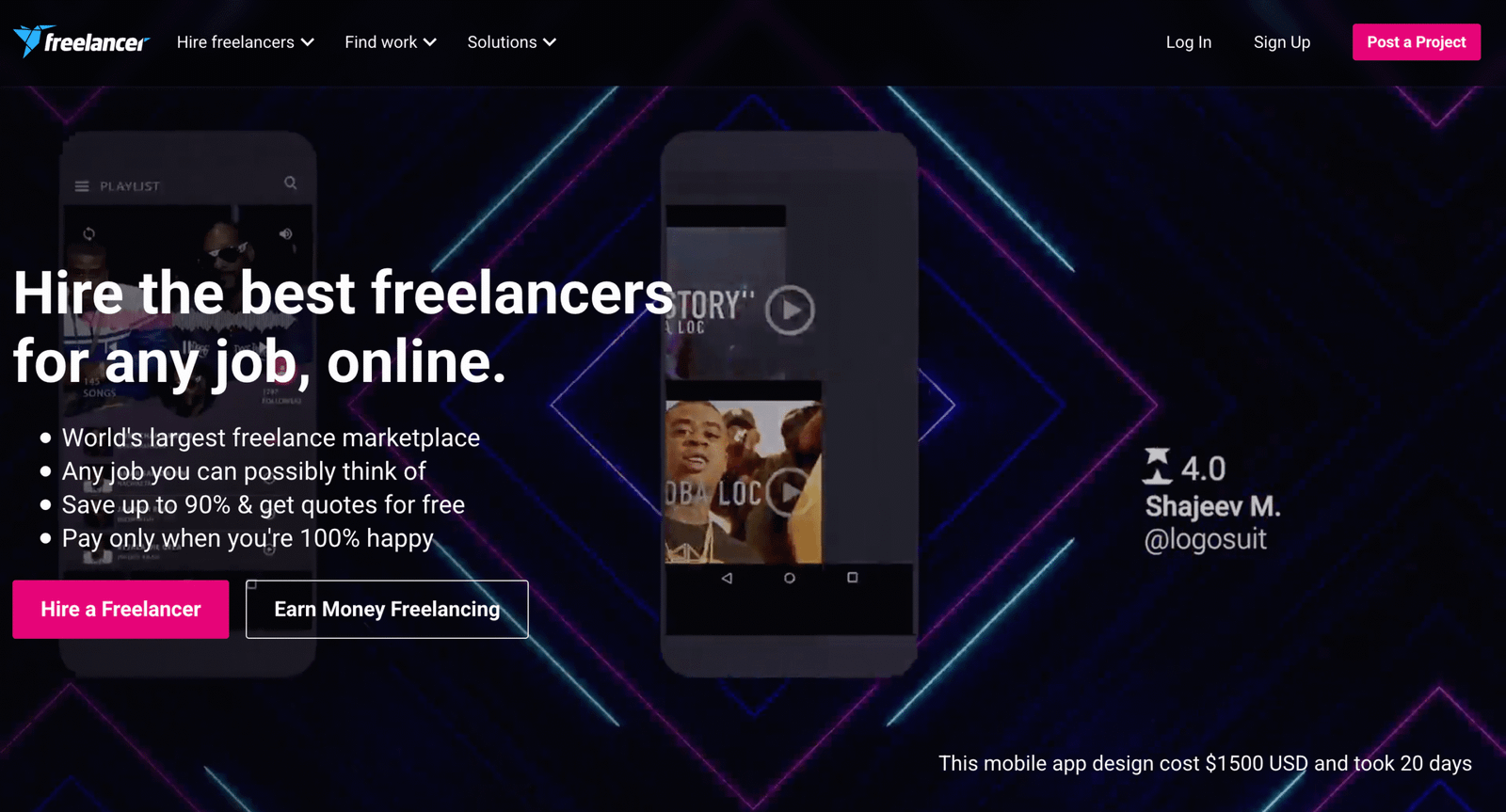
Freelancer.com follows the more traditional bidding model.
Clients publish projects, freelancers submit bids, and the platform also runs contests in some creative categories.
There is a lot of work to browse, but quality varies.
You will see sensible briefs alongside projects where the budget and expectations do not match at all. That means the useful skill is not just winning work. It is knowing which work is worth trying to win.
For freelancers who are comfortable with bidding, it can be another source of international opportunities, but I would use it selectively rather than treating every open project as something worth chasing.
Toptal
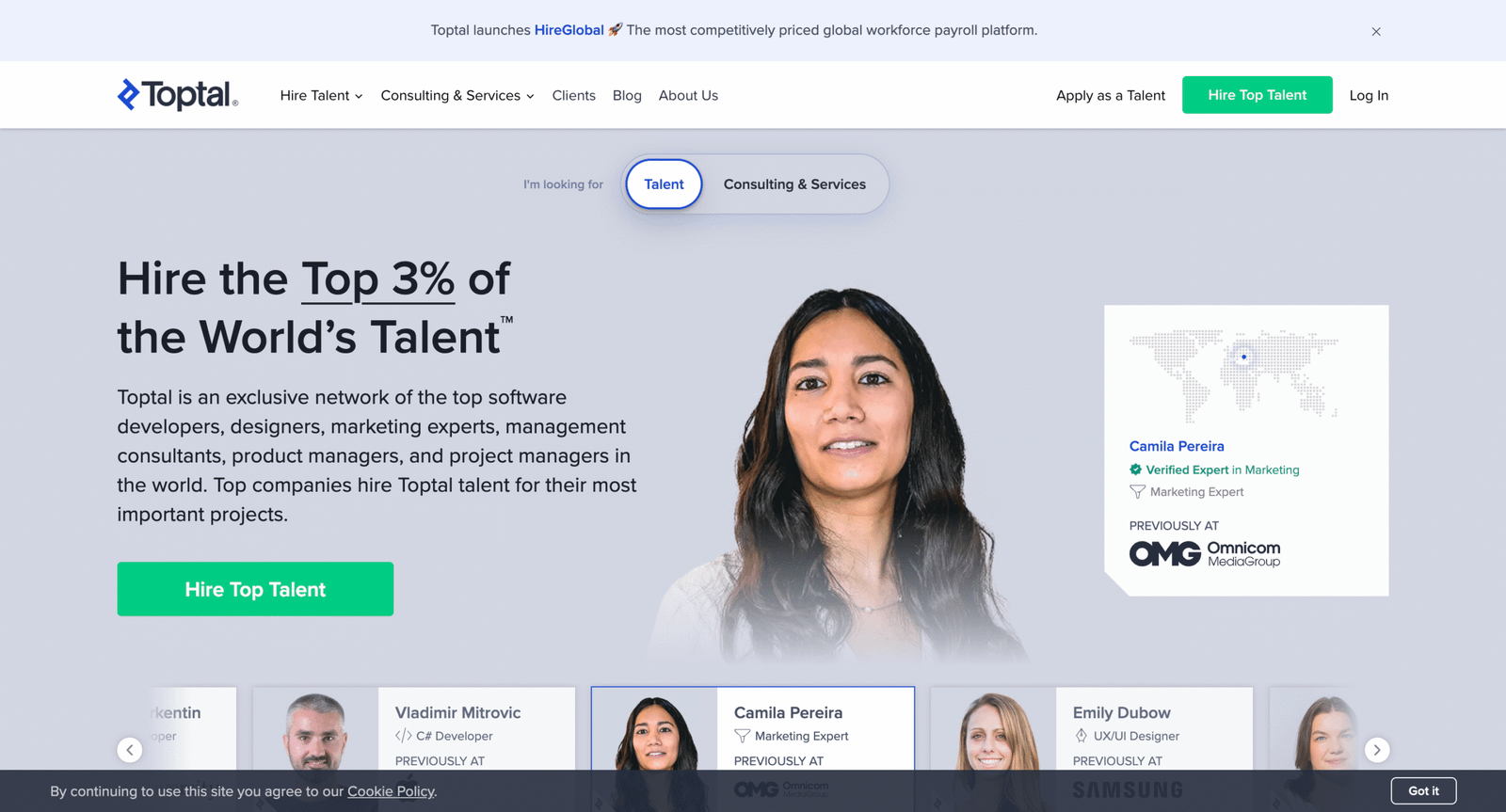
Toptal is more relevant once you already have strong professional experience.
It uses a screening process before people enter its talent network and is best known across areas such as software development, design, finance, project management and consulting.
That makes it different from an open marketplace.
If you are trying to get your first freelance project, there are easier places to start. If you already have several years of experience and want access to more selective international work, it becomes much more interesting.
Singapore has a strong professional and technology market, so experienced specialists may find this type of network more suitable than competing for small gigs.
LinkedIn is not a traditional freelance marketplace, but it can become one of the strongest sources of freelance work once you have some experience.
A startup needs a product designer for three months. A regional marketing team needs a consultant for a launch. Someone you worked with before moves to another company and needs outside help.
Those projects often begin with a conversation rather than a public freelance listing.
That makes LinkedIn particularly useful in Singapore because the professional network is dense and regional. Someone you know locally may connect you to a company elsewhere in Southeast Asia, or a former colleague may bring you into a project with an international team.
It takes longer to build than a marketplace profile, but direct relationships can become much more valuable over time.

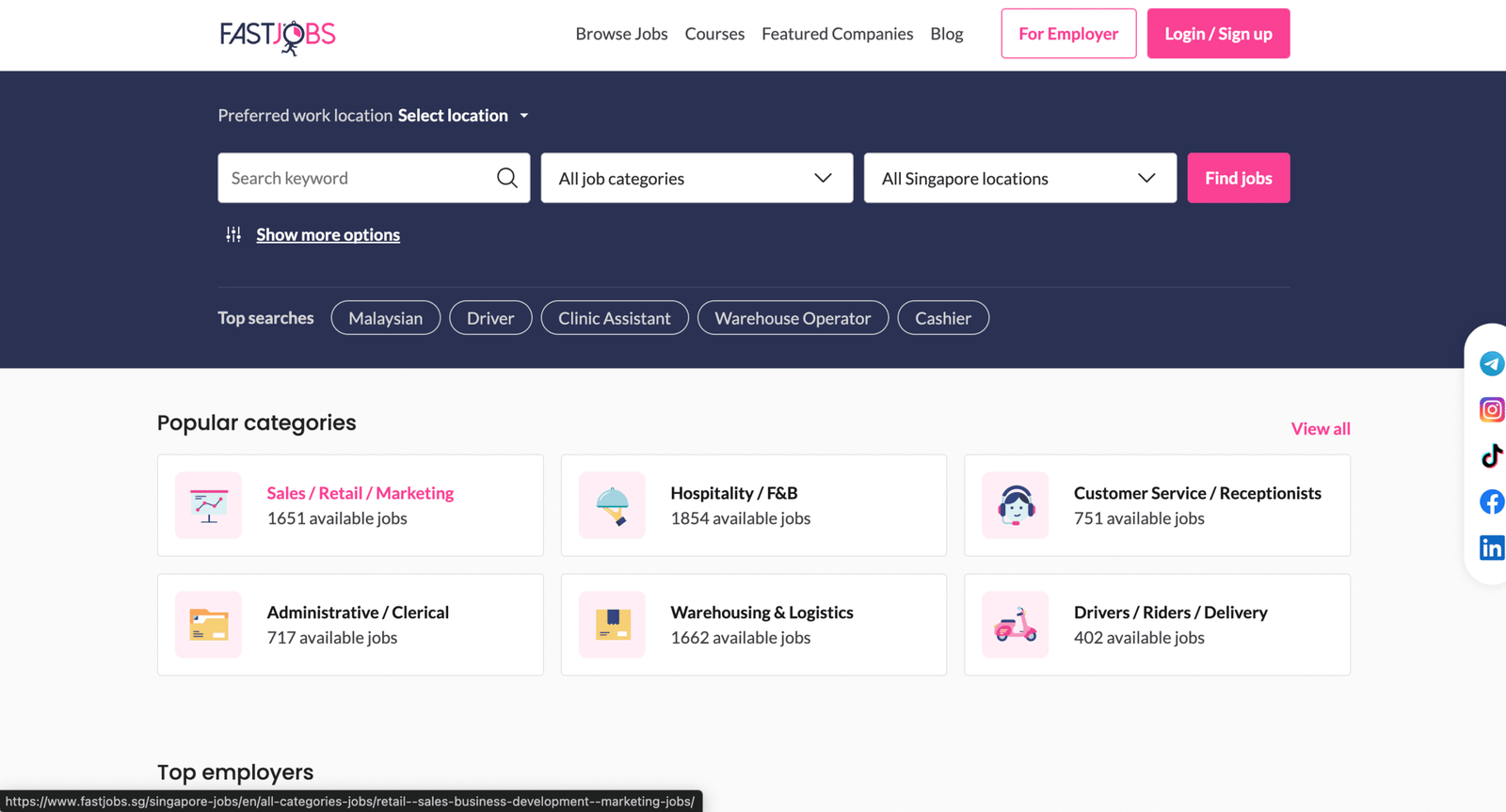
FastJobs
FastJobs belongs in a different part of the market.
It is built more around local flexible, part-time and short-term work than professional freelance projects delivered internationally.
That can make it useful for people looking for flexible income around administration, retail, customer service, events, operations and other local roles.
If you are a software consultant looking for a six-month international engagement, it probably will not be your main platform.
If you want flexible local work that can fit around another job, study or other commitments, it makes much more sense.
MyCareersFuture
MyCareersFuture is not a freelance marketplace either, but it is worth knowing if you are open to contract work.
The platform is Singapore-focused and is mainly built around employment opportunities, but companies also advertise contract and fixed-term roles.
For experienced professionals, those roles can sometimes sit very close to freelancing in practice. You may work with one company for a defined period, deliver around a particular need, and then move on.
That is especially common in technology, project management, consulting and specialist professional work.
If you only search traditional freelance platforms, you may miss these opportunities entirely.
Cultjobs
Cultjobs is worth looking at if your work sits in the creative, marketing or communications side of the Singapore market.
It focuses much more narrowly on creative-industry roles than a general job board, which can make the listings more relevant for designers, writers, marketers, content people and other creative professionals.
The work can include permanent roles as well as contract or freelance opportunities, so it is not a pure marketplace.
That narrower industry focus is exactly why it can still be useful.
A creative freelancer does not necessarily need another website with millions of unrelated listings. Sometimes the better channel is the one where the right agencies and companies are already looking.
Freelance marketplaces and contract-job platforms are not the same thing
This difference matters in Singapore because both routes can produce good freelance work.
On a marketplace such as Upwork, Fiverr or Freelancer.com, the platform is often involved in discovery, proposals, payments and project management.
On Glints, JobStreet or MyCareersFuture, you may be finding a company that wants someone for a contract or freelance arrangement and then dealing directly with that company.
LinkedIn sits somewhere else again because the work may come through people you already know rather than a public listing.
There is no reason to force yourself into only one model.
A freelancer may use Upwork for international client projects, JobStreet for longer local contracts and LinkedIn for direct referrals at the same time.
That mix can be much healthier than relying entirely on one platform.
Singapore gives freelancers access to a bigger regional market
One advantage of freelancing from Singapore is that the client market does not stop at Singapore.
Southeast Asia is close enough geographically and commercially that Singapore-based professionals can work naturally with companies in Malaysia, Indonesia, Vietnam, Thailand and elsewhere across the region.
Platforms such as Glints make that regional connection more visible, but you can also find those relationships through LinkedIn, referrals and direct outreach.
That is useful because Singapore itself is relatively small.
A freelancer who thinks regionally has a much bigger pool of potential clients without needing to immediately target the US or Europe.
The same applies the other way around. A company elsewhere in Southeast Asia may specifically want someone with experience working in Singapore’s business environment.
Freelancing in Singapore still means running a business
Once freelance income becomes regular, it helps to think about it as business income rather than just money coming in from side projects.
IRAS treats freelancers and other people providing services on their own account as self-employed when the nature of the working relationship fits self-employment. Self-employed individuals generally report that income under trade, business, profession or vocation rather than as salary.
IRAS also says income from digital or freelance services can be taxable when the activity is carried out for profit, including cases where the online platform itself is based overseas but the business operations are being carried out from Singapore.
That is worth knowing if most of your clients are outside Singapore.
Keep records of what clients pay, platform fees, relevant expenses and invoices from the beginning. IRAS requires self-employed individuals to keep proper records, and its current guidance says those records generally need to be retained for at least five years.
For your own situation, use current IRAS guidance for self-employed individuals or speak with a qualified professional rather than relying on an old freelance article.
Should you focus on Singapore clients or international clients?
There is no reason to choose only one.
Singapore clients can be useful because you already understand the business environment, working hours, payment systems and local expectations.
International clients give you access to a much larger market.
A Singapore freelancer can work with a local startup, a Malaysian ecommerce company and a US SaaS business at the same time without changing the basic way the work is delivered.
The better question is whether the client and project make sense.
Clear scope, good communication, sensible budgets and reliable payment are more important than whether the company happens to be in the same country as you.
That broader move toward cross-border independent work is something we also look at in our report on the global rise of freelancing.
Which freelance website should you start with in Singapore?
Start with the way you want to work.
If you want international projects and do not mind proposals, Upwork is an obvious place to learn. If you can package your service clearly, Fiverr may suit you better. If your portfolio already does a lot of the selling, Contra is worth exploring.
For Singapore and regional opportunities, Glints should probably be somewhere on your list. JobStreet is useful when you want longer freelance or contract arrangements rather than small projects, while FastJobs makes more sense for flexible local work.
LinkedIn becomes increasingly important once you have enough experience and relationships for direct client work to start happening.
There is no need to build all of these profiles at once. Pick a few that actually fit the kind of work you want, make those profiles useful, and spend enough time there to understand what clients are looking for.
Final thoughts
Singapore gives freelancers several very different routes into work.
You can use global marketplaces such as Upwork and Fiverr, regional platforms such as Glints, local job sites such as JobStreet, portfolio-led platforms such as Contra, and direct professional relationships through LinkedIn.
None of those models is automatically better.
Someone selling clearly defined creative services may do well on Fiverr. A software specialist may prefer longer contracts found through LinkedIn or JobStreet. A consultant may eventually get most of their work through referrals and barely use a marketplace at all.
The useful part is knowing which model fits the kind of freelance business you want to build.
If you are still getting familiar with independent work itself, our guide to what freelancing is and how it actually works covers the basics.
And if you want to compare the bigger global platforms in one place, we’ve put together a separate guide to the best freelance websites to find work in 2026.