
When we built FLXB 0.1, a lot of our thinking was around talent discovery. We were trying to make it easier for clients to find freelancers, understand their experience, look at agencies, and get more support once a project had started.
That made sense at the time, but as we kept working on the product and talking to clients, we started seeing the problem a little differently.
Most clients do not really want to search for freelancers. They usually come with a piece of work that needs to get done. It might be a landing page, a Shopify store, a set of short-form videos, a paid media campaign, a mobile app, or some help with development. The client is thinking about the outcome, not about spending two hours comparing profiles.
That became one of the biggest shifts in FLXB 2.0.
Instead of starting with a directory, we started with the project.
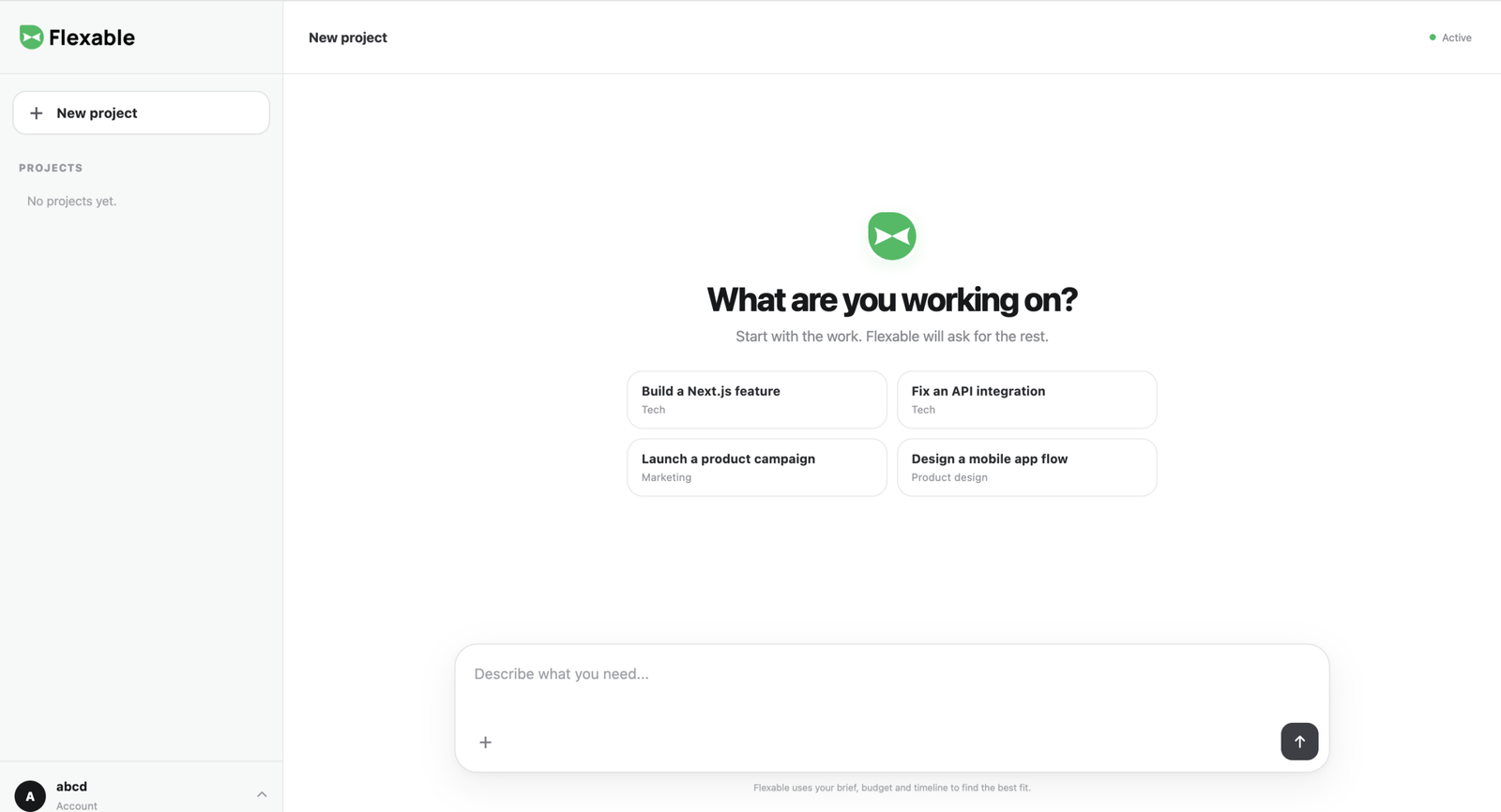
Start with the work
The current Flexable experience begins with the client explaining what they need.
That can include the type of work, the budget, the deadline, and anything else that helps us understand the project.
The client does not need to know the exact title of the person they should hire. Sometimes a company knows it needs help with a website but is not sure whether that means a designer, a developer, a copywriter, or a small team. That is normal.
The important thing is to understand the work first.
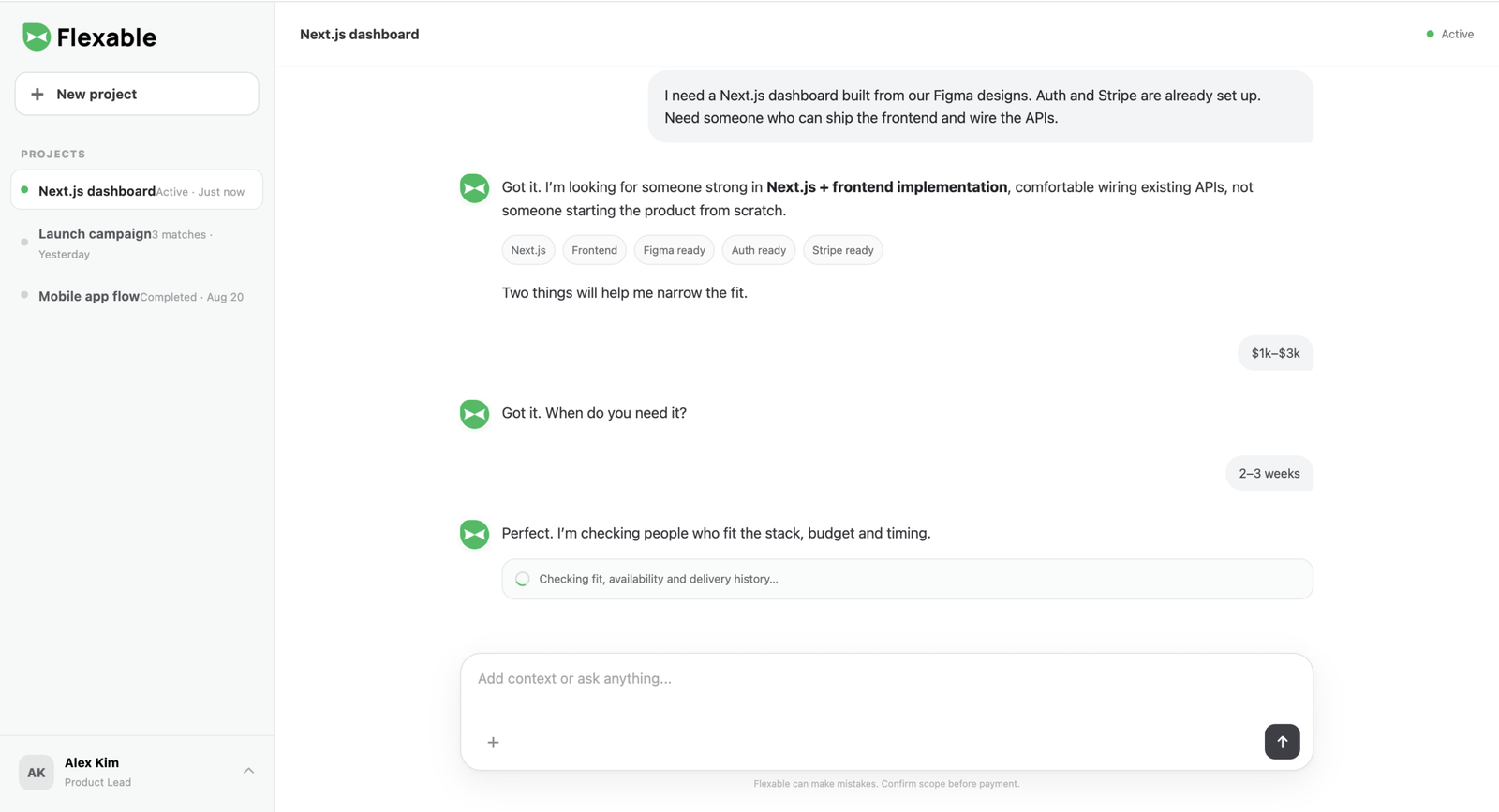
Once the project is clear enough, Flexable can start narrowing down the people who are more likely to fit.
Less searching, better matching
One thing we learned from the earlier version of Flexable is that showing more profiles does not always make hiring easier.
If a client needs one designer, giving them 200 options can create more work rather than less. They still have to figure out who has the right experience, who is available, who fits the budget, and who can work within the timeline.
FLXB 2.0 moves more of that filtering into the matching process.
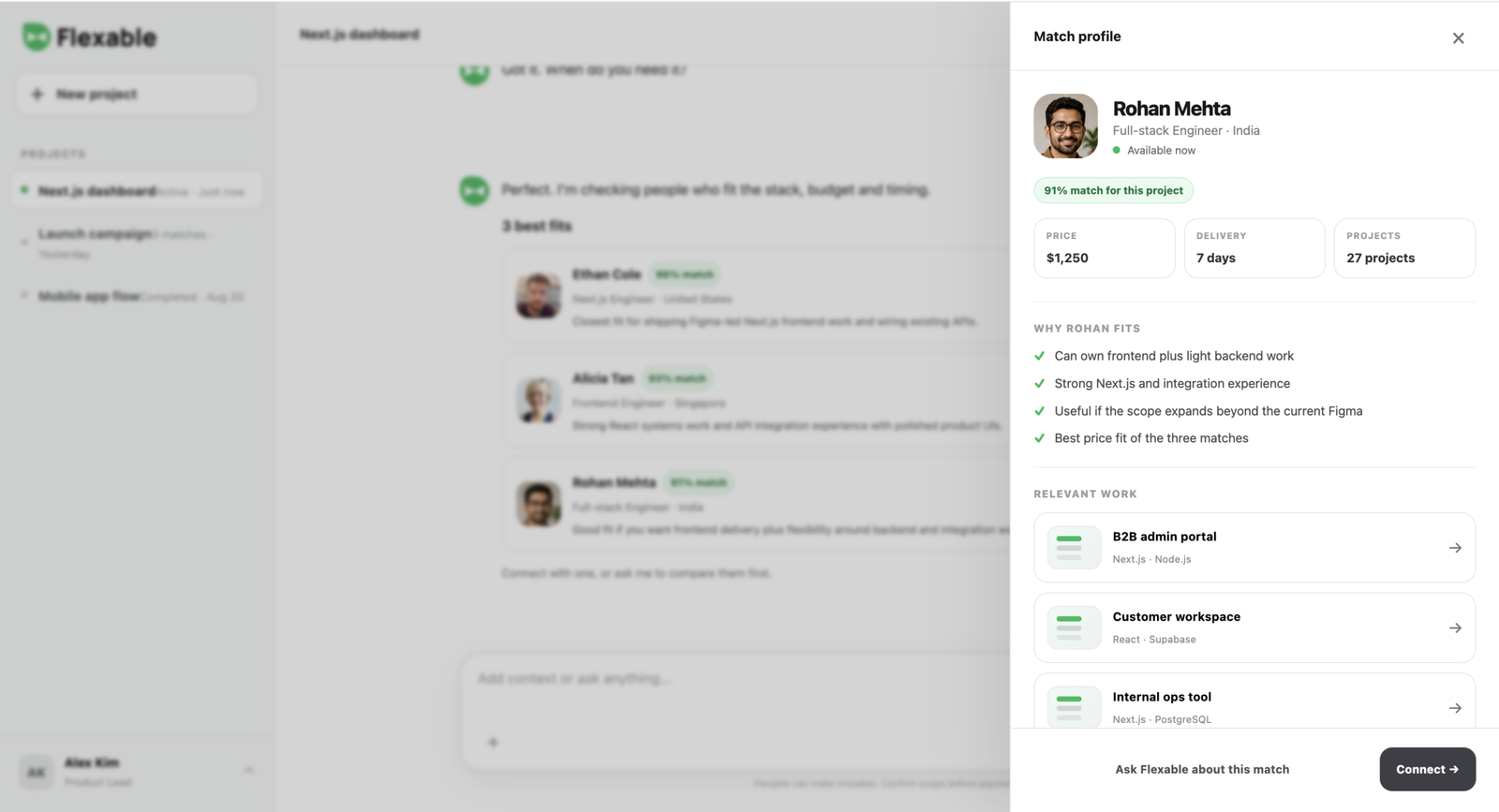
The client shares the project, and Flexable helps narrow the options down to people who look relevant to the brief. The client can still review their work, check their experience, ask questions, and decide who they want to work with.
We are not trying to take the decision away from the client. We are trying to make sure they are making that decision from a smaller and more relevant set of options.
The conversation still matters
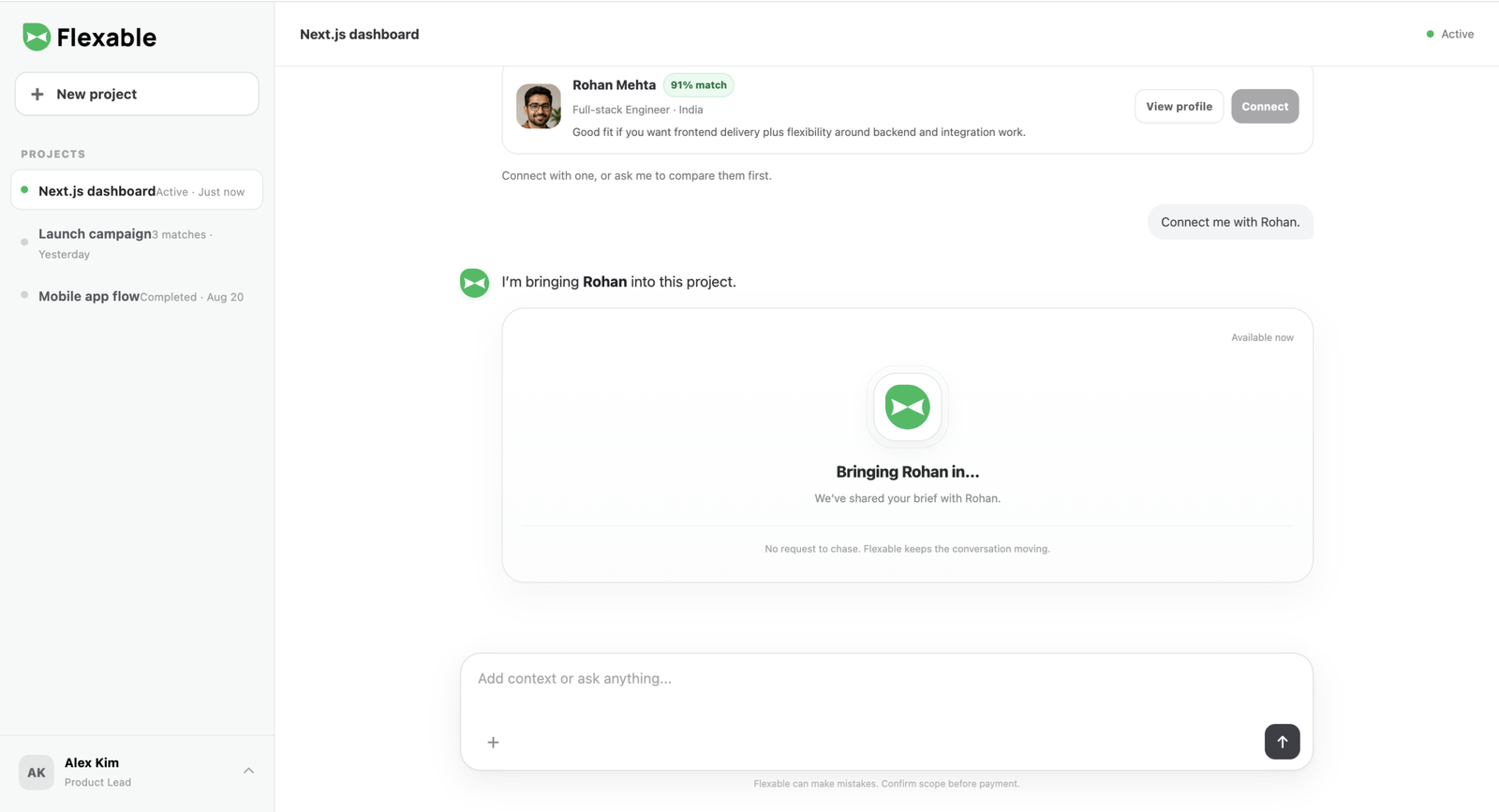
A match is useful, but it is not enough on its own.
There are always things that only become clear once the client and freelancer speak. The client may want to know whether the freelancer has worked on something similar, whether the deadline is realistic, how they would approach the project, or whether a certain tool or stack is a good fit.
The freelancer will usually have questions too.
That conversation is important because good freelance work is not just about matching keywords on a profile. Two people can have similar experience and still have very different ways of working.
Flexable can help create the match, but both sides still need to decide whether the relationship makes sense.
The project sits at the centre now
This is probably the clearest difference between FLXB 0.1 and FLXB 2.0.
In the earlier version, a lot of the product naturally revolved around freelancer and agency profiles. Discovery was a major part of the experience.
In FLXB 2.0, the project itself is much more central.
The brief comes first. Then the match. Then the conversation. Once both sides are comfortable, they can agree on the work, the price, the timeline, and the delivery.
That order feels more natural because it follows what the client is actually trying to do.
They are not trying to browse a marketplace. They are trying to finish a project.
Clearer scope before work starts
We also wanted to make the project setup more useful.
A lot of freelance problems do not begin during delivery. They begin before the project starts because the scope was never clear enough.
The client may think five pages are included while the freelancer thinks it is three. One side may expect unlimited revisions while the other expected two. The deadline may depend on client feedback, but nobody has discussed when that feedback needs to happen.
Those small misunderstandings can become large problems later.
FLXB 2.0 puts more emphasis on making the agreed work clear before the project moves ahead. Both sides should understand what is being delivered, what it costs, and when it is expected.
It sounds basic, but it makes a big difference.
Payment should be connected to the work
We thought about payment in the same way.
A payment is much easier to understand when it is connected to a clear scope. The client knows what they are paying for, and the freelancer knows what they are expected to deliver.
That is why the current Flexable experience brings the brief, the agreed work, payment, and delivery closer together.
This is also a continuation of something we were already trying to solve in FLXB 0.1. We never wanted Flexable to be useful only until the moment two people met. The project itself always mattered.
Profiles have a clearer role
Profiles are still important in FLXB 2.0, but their job has changed slightly.
The profile is less about getting a client to browse randomly and more about helping the client understand why a particular person may be a good fit for a specific project.
That means previous work, projects, experience, testimonials, and other proof become more useful than a long list of skills.
A good profile should give the client enough context to say, “Yes, this person looks relevant to what we are trying to do.”
That is much more useful than simply saying someone knows JavaScript, design, SEO, or marketing.
AI helps, but it does not replace people
AI has naturally become a bigger part of how products like Flexable can work.
It can help understand a brief, identify relevant skills, compare requirements, and improve matching. That can reduce a lot of manual work.
But there is a limit to what should be automated.
A client may like someone’s work but not their approach. A freelancer may look perfect on paper but decide the project is not a good fit. The budget may need to change after the first discussion. The original scope may not be realistic.
Those are normal parts of project work.
We use technology to make the process faster and more relevant, but we still want the final decision to stay with the people involved.
Agencies are still part of the model
One thing that has not changed from the early version of Flexable is our view on agencies.
Some projects are better handled by one specialist. Others need several people working together.
If a company needs design, development, content, and marketing support at the same time, hiring four unrelated freelancers may work, but it is not always the best setup. In some cases, an agency or an existing team makes more sense.
Flexable should be able to support both.
We do not think every project needs to fit into the same hiring model.
What changed from 0.1 to 2.0
FLXB 0.1 was mostly about building a better way to discover and work with freelance talent.
FLXB 2.0 starts more clearly with the work itself.
The client explains what they need. Flexable helps identify relevant people. Both sides talk, agree on the project, and move forward from there.
That is the main change.
It is less about browsing a marketplace and more about helping someone move from a project requirement to the right person or team.
What has not changed
The basic problem we care about is still the same.
Businesses need good people, and good freelancers need good opportunities. Both sides waste a lot of time trying to work out whether they have found the right match.
Flexable is trying to reduce that wasted effort.
The product has changed quite a lot since FLXB 0.1, and it will keep changing. But the direction is much clearer now.
We want clients to spend less time searching and more time working with the right people.